What I’m Watching & Reading: June 14, 2026
Featuring Tony Hinchcliffe, Tim Dillon, Whitney Cummings, and more.
Welcome to your Sunday edition of the Humorism newsletter. The below roundup includes:
-Some thoughts about Vulture’s review of the new Tony Hinchcliffe special;
-A fascinating essay in The Drift about the visual language of the Trump regime;
-A revealing story from Tim Dillon about Joe Rogan’s Comedy Mothership;
-A new theory from Whitney Cummings’ about what inspired Donald Trump to run for president;
-A new(ish) comedy special I enjoyed;
-And more.
While we're here: don’t miss this week’s episode of the Humorism Evening Podcast, my interview with The People’s Joker filmmaker Vera Drew, or this essay about Tim Dillon’s role in the Epstein coverup.
Thanks as always for reading, and please chip in to keep this newsletter going if you can:
Oof, What a Mess: Vulture on Tony Hinchcliffe
 Hershal Pandya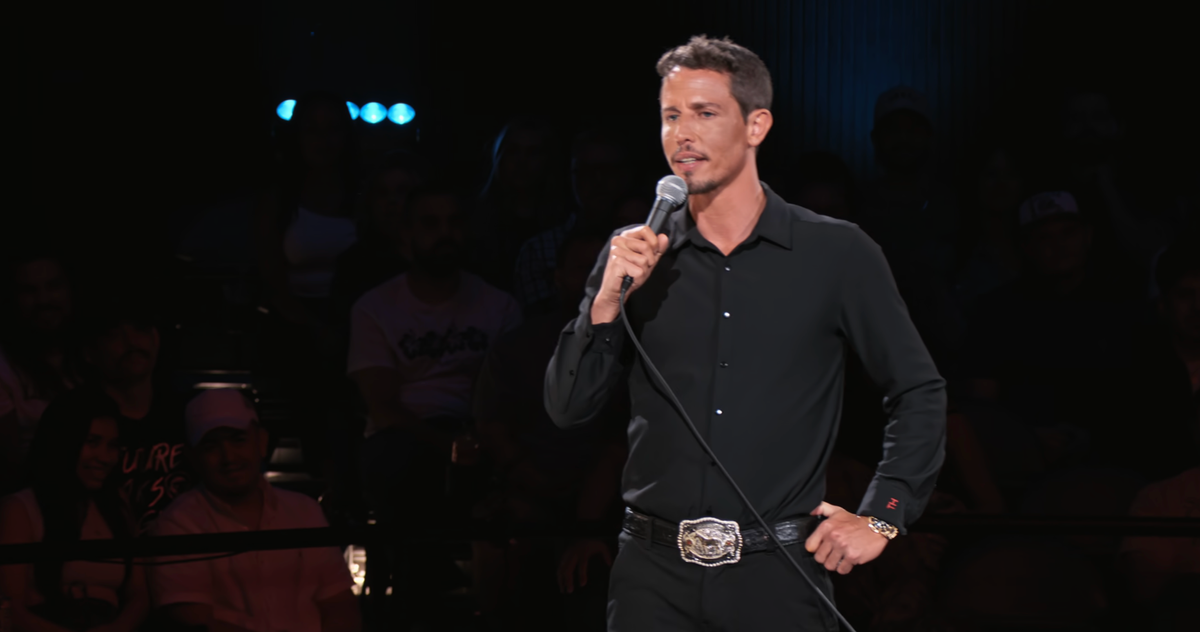
Click here to read a non-paywalled version.
I cannot stand the faux-savvy attitude to right-wing comedy adopted by reviews like this one, which argues that Hinchcliffe’s Man of the People “is not good or bad on the merits of its subject matter”—for instance, the joke where he threatens to call ICE on his housekeeper—but because it is poorly written. I’m reminded of so many half-hearted critiques of Dave Chappelle’s transphobic specials, which all took some form of: “I don’t care that the jokes are transphobic, I care that they’re not funny.” How fortunate you must be not to care about an incredibly influential comedian targeting a persecuted group on a global platform!
Allow me to propose that the problem with hate speech is that it’s hate speech, and that if it were more competently packaged into an aesthetic object, that would be worse. The idea that well-written comedy mitigates racism (or transphobia, or what have you) assumes that humor has a moral purification effect, or in other words that aesthetics and ethics are inherently linked. In reality it is no more virtuous to tell a good joke than it is to be a beautiful person, and it takes only a moment’s consideration to understand that if Tony Hinchcliffe were a better joke-writer, then he would also be a more effective communicator of his noxious beliefs. I can think of many comedians who are such good joke-writers that nobody particularly cares about their noxious beliefs, and I would argue—I have argued, I will continue to argue—that their success has been quite detrimental to civic life.
 Seth Simons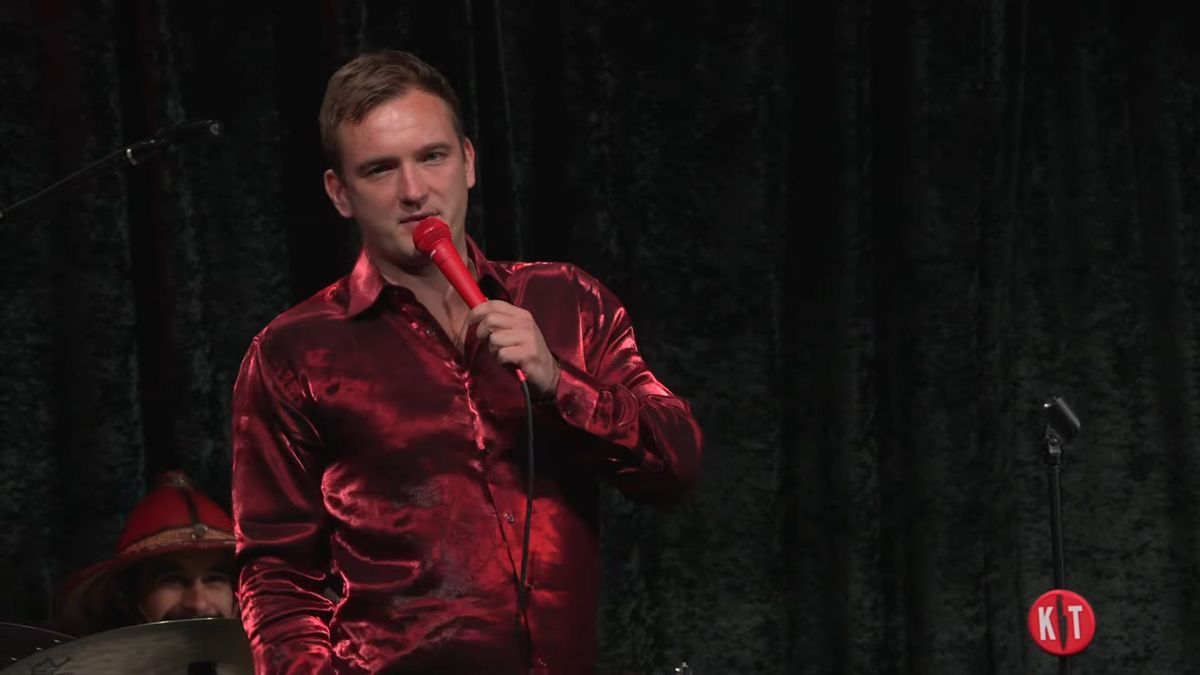
Does that make it wrong to comment on the technical failings of Hinchcliffe’s new special? No, but it seems to me that these comments raise bigger questions that critics ought to address too, for instance: why would Netflix release such an obviously bad special? What systems allow such an technically incompetent artist to gain such mainstream legitimacy? If it has always been the case that one can be a successful comedian without being particularly funny—and I believe that this has always been the case—then what has changed such that the gates are now open to comedians who are not only technically incompetent but also incredibly, explicitly racist? Who let this happen, and who refused to stop it? I think critics can be allergic to these sorts of material analyses of art, but sometimes we need them to understand what, exactly, is going on in a particular work.
It’s easy to forget that fame is socially constructed. When someone like Tony Hinchcliffe gets famous, he does so on the backs of countless others: venue owners, bookers, agents (like the ones at WME who dropped Hinchcliffe in 2021 and the ones at UTA who signed him later), TV producers, media executives (like the ones at Netflix who bought four specials from him), and of course all the other comedians happy to associate with him and all the budding little far-right comics eager to seek his favor. It takes a village to create a nazi comedy star; it takes a village to look away from his technical shortcomings because the nazi audience he appeals to is just so lucrative. As tempting it may be to write off Hinchcliffe’s special, we have to reckon with the village that gave to us. Individual artists come and go, but systems are resilient—and much more dangerous for it.
 Seth Simons
Myq Kaplan: Rini
I’ve liked the comedian Myq Kaplan ever since I saw him do an impression of Aziz Ansari shouting “Noooo!” ten years ago at Union Hall, or possibly the Creek and the Cave, unless it was Pine Box Rock Shop, and this week I finally got around to watching his latest special, which I highly recommend.
Into the Right-Wing Dreamworld | DHS’s Regime of Images
 Livia Wood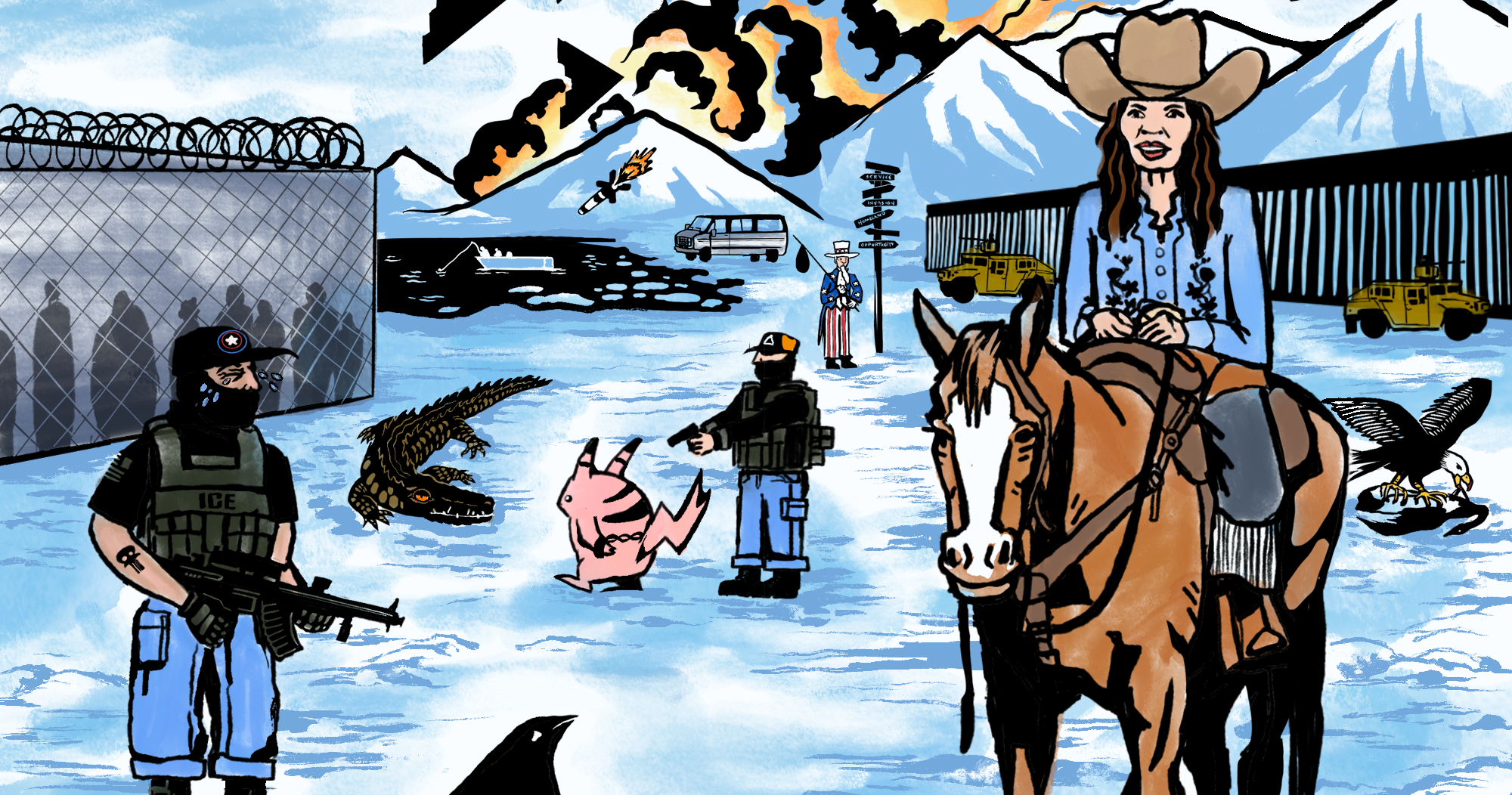
If the first Trump administration was a regime of words — the years of presidential tweets and unfiltered musings; of covfefe, grab ’em by the pussy, not sending their best — the second is a regime of images. Of course there were totemic visuals in those earlier years: tiki-torch-wielding neo-Nazis, gas-masked cops streaming out of burning precincts, face-painted hordes descending on the Capitol. (Crowds and fire were notable motifs.) But for the most part, the novelty of the first administration’s political style lay in its desublimation of speech. How could he say that, liberals were always asking. Today’s unofficial MAGA slogan, in contrast, is You can just do things — that is, the government can flood the streets with murderous federal cops, or start a war with Iran without waiting for Congressional approval, let alone making any real effort to manufacture the public’s consent. Funnily enough, this change mirrors a reverse development, a shift from an administration of professional doers to one of professional talkers: from career bureaucrats like Steven Mnuchin and Jim Mattis to the posse of podcasters, news anchors, and health influencers who stalk the halls of government today.
Tim Dillon reveals what Comedy Mothership is actually like
I revisited this year-old clip while I was working on something else this week and thought I ought to share it here. Appearing on the Legion of Skanks, Tim Dillon describes a show at the Comedy Mothership where his opener bombed so badly that Rogan made him kick the guy out:
Dillon: I bring my opener to do a Tim Dillon & Friends show. Young guy from New York. He goes up, he's having a rough set, I'm sitting on the balcony watching him. I'm praying, I'm going, “I hope no one is watching this.” I feel an energy behind me. Rogan is standing there watching him bomb like this. And he's bombing in kind of like a f—oty way. He's a straight guy, but you know how New York comics are. They're like, “Maybe I'll suck a cock.” You know what I mean? I'm the least gay of the comics, I think.
So he's being kind of gay and he's bombing. And then Rogan's behind me. And then we walk back in the green room. Rogan goes, “He's bombing man. He can't be here.” And I go, “I know, I'm getting him off right now.” And I literally, I run to Adam Eget and I go, “Light him, light him now.” He goes like, “What's going on?” I go, “Light him now.” I started texting [Joe] DeRosa, I'm like, “Get back here.”
And then the kid got offstage and I felt really bad. I said, “Listen.” And this is the worst nightmare of anybody, right? I go, “Listen.” He got off, he goes, “Yeah, it was a little tough.” He was still smiling. I go, “No, no, no. Here's the thing.” I go, “You gotta go right now.” He goes, “What do you mean? My bag's in the green room.” I go, “Yeah, yeah, yeah. You gotta get out of this club right now. Joe is unhappy and it looks really bad for me. Get the fuck out. I worked years, you get the fuck out of here.” He goes, “Where do I go?” I go, “I don't know, just walk around Sixth Street.” He's like, “It seems dangerous.” I go, “Get out of this club.”
Sure sounds like a nurturing environment to grow and develop as a comic, huh?
Warrior Pose
Mary Turfa in The Baffler on "Yoga for colonizers":
Mind-body, brain-body, however we do it, we do it to get to wellness, vitality, beauty—not in pursuit of vanity but for holistic reasons. Sexual fitness inevitably follows. “Why Are Israelis So Sexy?” reads a headline in the Times of Israel, published almost two years into the genocide. We start off strong, with farmers in South Africa. We learn about another love child, the zorse, from “the conjugals” of a zebra and horse, an animal that has “hybrid vigour.” So it goes for the Israelis, although there is more “to this sexiness than just the healthy cross-pollination of our genomic ingathering.” There are layers beyond eugenics: For example, Israelis “know how to get their hands dirty, do the hard work—clean the house, fix their own stuff, pull together as a unit, function in community. They help each other. This is native to the culture.” What else is “native” to the settler nation? Well, before they gave us the normalization of genocide, took pictures of themselves posing for dating apps next to lingerie, in the homes of women they displaced, there was a need to “direct all this sexiness somewhere.” So, the “Israelis basically birthed the trance music scene in the late 1980s in Goa, and it spread like oil on a suntanned back, the world over. They made the world party, and party hard.”
Jerry Seinfeld Saying Palestine “Doesn’t Exist”
FinesseFave asks Jerry Seinfeld to drop a Free Palestine after the Knicks game
— yeet (@Awk20000) June 11, 2026
"It doesn't exist” pic.twitter.com/0AExhRVL33
All I’ll say is I think it must take a deep well of hatred to say this on camera in 2026 when you could just as easily say nothing.
Notes on Craft: Writing in the Hour of Genocide
 Fargo Tbakhi
Palestine requires that we abandon this catharsis. Nobody should get out of our work feeling purged, clean. Nobody should live happily during the war. Our readers can feel that way when liberation is the precondition for our work, and not the dream. When it is the place we stand, and not the place we shake ourselves towards.
In this way, what the long middle of revolution requires, what Palestine requires, is an approach to writing whose primary purpose is to gather others up with us, to generate within them an energy which their bodies cannot translate into anything but revolutionary movement. This is what Boal modeled for us in his theatrical experiments, which were dedicated to empowering audiences to act, to participate in a creative struggle to envision and embody alternatives. For Boal, theater was not revolution, but it was a rehearsal for the revolution, meant to gather communities together in that rehearsal. Creative work readies us for material work, by offering a space to try out strategies, think through contradictions, remind us of our own agency.
Jeff Ross on Tom Brady, Trump, and the Roast of Kevin Hart
Here, on Bari Weiss’s sister’s podcast, the alleged pedophile Jeff Ross and the Zionist comedian Dan Ahdoot celebrate the return of the slur “retard,” which Ross says is okay to use so long as it’s handled by professionals and not deployed in a mean spirit. Ahdoot credits the Netflix's Roast of Tom Brady with bringing the word back—as you may recall, Nikki Glaser used it in her set—and Ross demurs, arguing that what the roast brought back was fun. This is something he’s said quite a bit lately; he seems to genuinely believe that the roast had a healing effect on the national psyche. He’s right to resist Ahdoot’s praise, however: it was Shane Gillis’s 2024 SNL monologue that helped return the word to the mainstream.
 Seth Simons
Finally Talking About It: Thank You Whitney Cummings
Midway through this interview, Whitney Cummings seems to reveal that she believes the Comedy Central Roast of Donald Trump (in 2011) inspired to run for president (in 2015):
Cummings: In roasting, the idea is that you leave and everyone likes all the participants more. You're like, "I thought I hated that guy. I love that guy now, because he has a sense of humor about himself." You know that Donald Trump, when I did the Donald Trump roast, afterwards, he started his presidential campaign because he knew that this is how you make people love you is to have everyone trash you and then you laugh about it and it makes you look great.
Grace O'Malley: That's wild.
Cummings: Yeah. Oh no, we were all trashing him so hard. I was like, Melania Trump had a jewelry line on QVC or something at the time. Ivanka Trump used to have shoes and they were actually fire.
The idea here is not even that Trump was so insulted that he decided to get back at the liberal establishment by running for president, á la the theory about Obama’s jokes at the 2011 White House Correspondents’ Dinner. Rather, it’s that the roast made him realize that getting attacked by Democrats on the campaign trail would make people like him. Okay!