A Delightful New Special from Edy Modica, an Okay New Special from Tom Cashman, and More
What I've been watching and reading this week.
A few offerings for you today, including a very funny new special from Jury Duty’s Edy Modica and a thought-provoking essay about the Weather Underground. As always, please share this with anyone who might enjoy it, and consider upgrading to a paid subscription if you can.
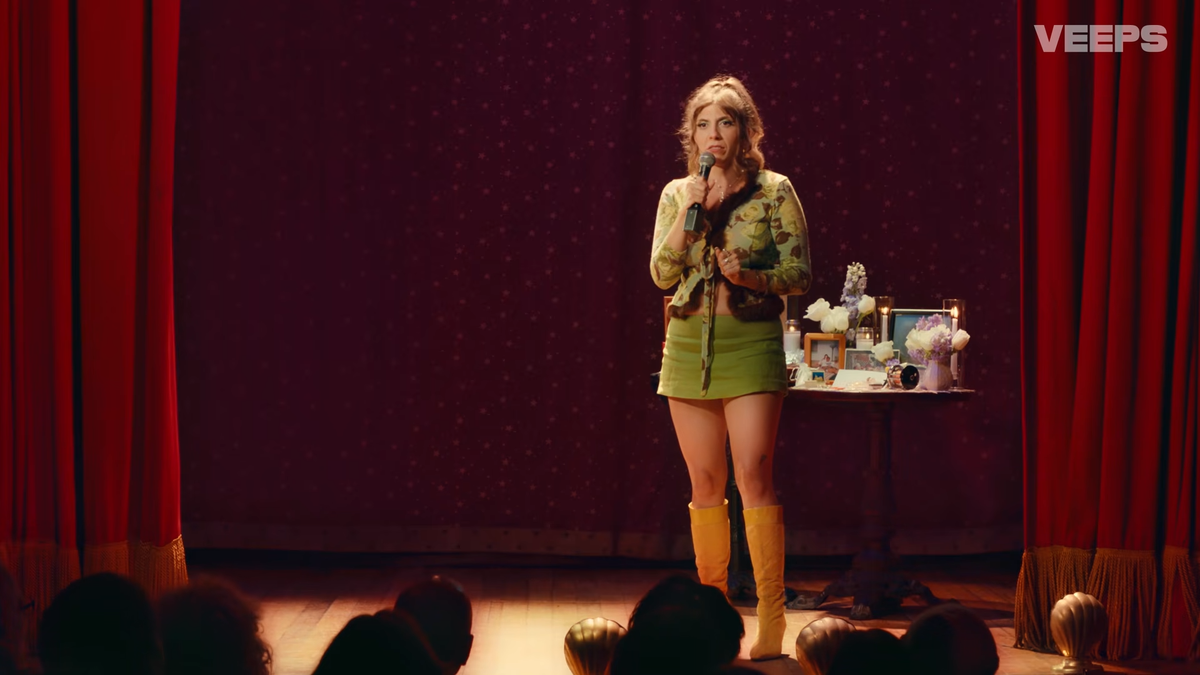
Edy Modica, I’m Just Like You (And It Sucks)
I’m a big fan of Edy Modica and I loved her debut special, now streaming on something called Veeps. She’s an effortlessly funny storyteller with a talent for rendering gruesome bodily horror into something approaching poetry, like when she describes an elderly relative’s toenail as so fragile that it crumbles like sand at a light scratch. Much of the special deals with her working-class upbringing, with a cast of cousins, aunts, uncles, and cruise ship hookups that seems torn right out of a Safdie brothers movie. One of my favorite stories begins with this perfect sentence: “I don’t have dental insurance, but I do have a dentist who has a bartering system with my family.” You can buy the hour for $10, but a $20 subscription gets you access to a pretty decent comedy library, including specials from Beth Stelling, Eugene Mirman, Reggie Watts, and David Cross.
Tom Cashman, The Formula for Happiness
Say it with me: I wanted to like this more than I liked it. I’d never heard of Cashman before, but the special came highly recommended, and his whimsical style quickly won me over. In an early bit, he reassures us that he’s tested all these jokes and he knows they’re good; the special cuts to a wide angle, revealing a screen behind him with the text of his previous joke, and he takes us through some of the material he worked out in online chatrooms. I wasn’t expecting this to be a “PowerPoint presentation” special, and the reveal caught me delightfully off guard; so did many of the graphics he incorporated into his set. At the same time, I was underwhelmed by much of his storytelling, which I found to be the sort of thing where you can sense the comedian had an idea that was spontaneously funny in the moment, and they're trying to build it out into a form that it isn't actually funny enough to support: for instance, a bit about how he knows his car is pro-life, because when he put his phone, which weighs the same as a 12-week-old fetus, on the passenger seat, the car registered it as a person and set off the seatbelt alert. A bit too long of a walk, I’m afraid.
Sarah Sherman on Monét Talks
There’s a bit in this interview where Sherman complains that people who criticize SNL don’t appreciate how much work it is:
Sherman: People love to be like, "SNL sucks." And I'm like, okay—should I just say the whole timeline? So Monday you get there at 5pm, you pitch your ideas to the host, you kiki a little bit, you go home probably 8pm. Tuesday is writing night, so people get there probably around 1pm and then you're just up until 4am the next day… Wednesday is the table read. You get in at 3pm, you read 40 sketches and you probably get home at like 10pm. Then you have rehearsal on Thursdays that go from 1pm to probably 8pm. So that's kind of your light day. Friday you're probably—all those pre-tape sketches, you could get called in at 6am and then leave at 1am and then you have to be back on Saturday, we start at noon. So by the time we are on TV at midnight, I'm fucking tired. I've been in that building since noon already. It's crazy. So anytime [unintelligible] "SNL sucks," I'm like, you don't know the things I've been through.
As a person who criticizes SNL, I would like to respond: yes, we do know, that’s actually incorporated into the criticism, in fact it’s the whole point—that the show puts so many people through such grueling, often discriminatory conditions for an output that is 1) only occasionally funny, and 2) expressly designed to provide publicity to the rich and powerful, while enriching one of Hollywood’s most famously abusive bosses. As I put it in 2023:
Then there are the other costs. If what we’ve heard is true, many people have been hurt by this show. They’ve been tormented and harassed, abused, degraded, made to believe in their own disposability, used up, and tossed aside. And for what—comedy skits? For the Blues Brothers, for Church Lady and Stefon? For David S. Pumpkins? For a hundred or so people to live like royalty? For one man to rule an empire?
Or as the writer Josiah Hughes put it much more succinctly:
to everyone hating on SNL so much: you try working with 30 other people to come up with ~40 minutes of funny material every week and you have no other commitments and it's your full-time job and it pays pretty good. not as easy as it looks.
— jos (@josiahhughes) February 10, 2019
Emmett Rensin, “A Better World Is Not Possible”
 Buy on Bookshop.org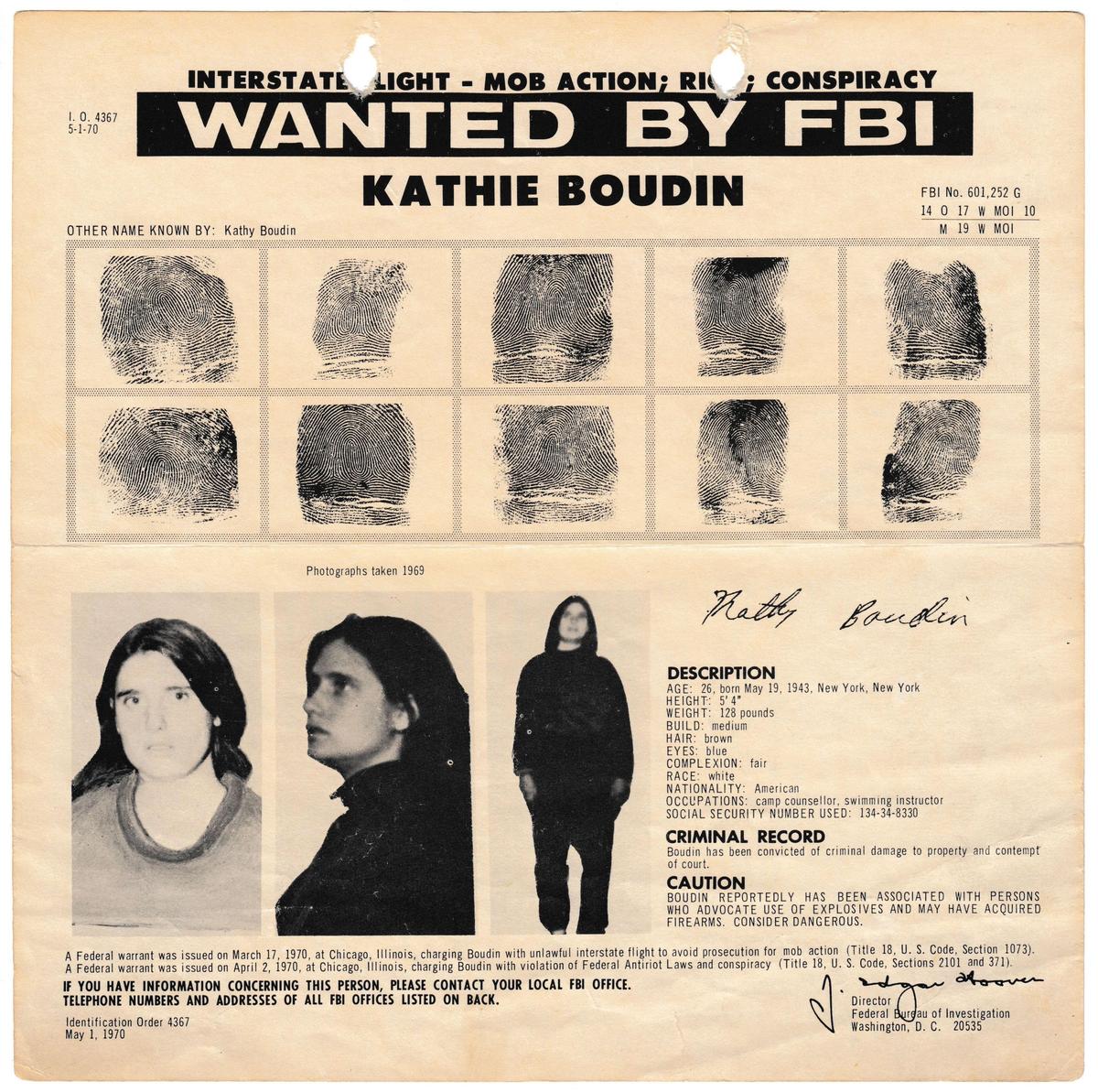
It is strange to revisit the Weather Underground now, at least for me, a decade past my own dalliance with revolutionary politics. I spent years in and around what passed for radical and socialist organizations in the early 21st-century United States, most notably the (pre–snaps-not-claps) Democratic Socialists of America. I mean that I used to believe a better world was possible. Reading Dangerous, Dirty, Violent, and Young, what struck me most was what utter pussies we all were. We never did anything that would put the president and the director of the FBI in fits or provoked them into dedicating the full force of federal law enforcement into disrupting our activities, assassinating our leaders, or breaking up our meetings by force. I suppose that we were more committed to the Left’s own version of slow boring—the endless work of education, organizing, labor solidarity—work that has proved precisely as effective as its liberal cousin, not that any of that spared us from the same dismissive criticism: we were ineffective, counterproductive, getting in the way of the sensible Democratic agenda just around the corner, just dorm room–bull sesh idiots for finding the state of the world appalling, for believing that something must be done. It is difficult to take the idea that the Weather Underground just went too far seriously when a far less radical era of the American Left met precisely the same ridicule and bullshit moral panic.
Haley Mlotek, “How to Land a Celebrity Profile”
 Haley Mlotek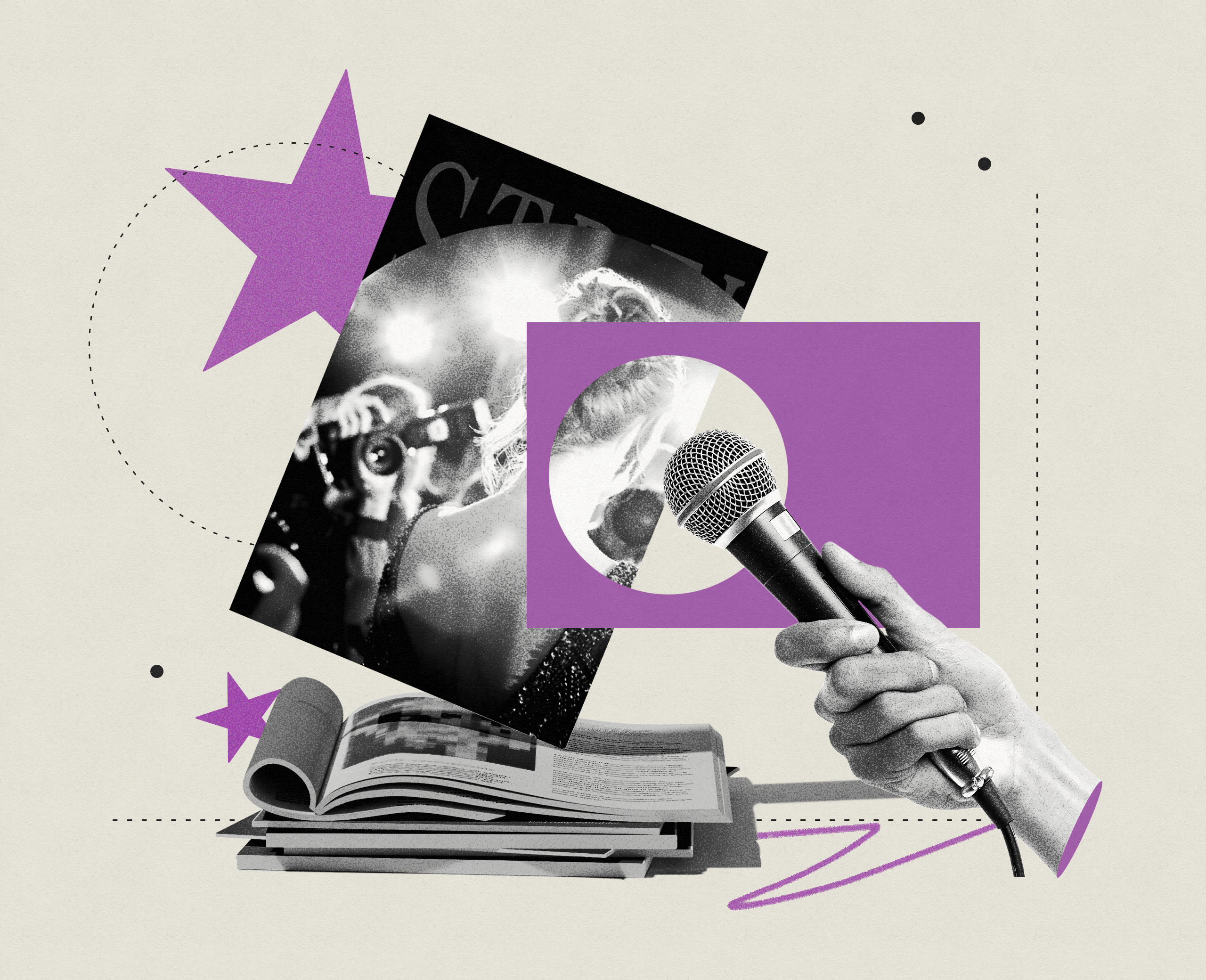
One particularly intriguing conundrum happened during last year’s Hollywood awards season. A celebrity was talking candidly about her four children, and no one blinked. After the interview, a publicist called an editor to say that only two of those children are publicly known, and asked for the answer to be updated to be about the celebrity and her two children. “It’s strange, because you wonder about the celebrity’s motivation for keeping two of their four children secret,” the editor told me. “But it’s also like, if that’s going to do damage to you, then it’s truly not advantageous to us to publish it. So, sure, we can leave that out.”
In another recent instance, Vanity Fair produced a video featuring Chloe Fineman, the Saturday Night Live cast member, and, upon hearing the objection of an SNL publicist, cut some distasteful details about the time she was working as a camp counselor and, as she said, “pantsed a boy”—specifically, that the child was six and his “little ding-a-ling was out.” (A spokesperson for SNL didn’t respond to requests for comment; Vanity Fair had nothing to add.)