What I'm Watching & Reading: June 5, 2026
On cancel culture, Ramy Youssef's defense of the Riyadh Comedy Festival, and more.
I’ve been traveling this week, hence the podcast is on a brief hiatus and I haven’t been consuming very much media. As such, this week’s What I’m Watching will instead be a roundup of What I’m Watching and Reading. Stay tuned for more of that Humorism content you crave, coming soon.
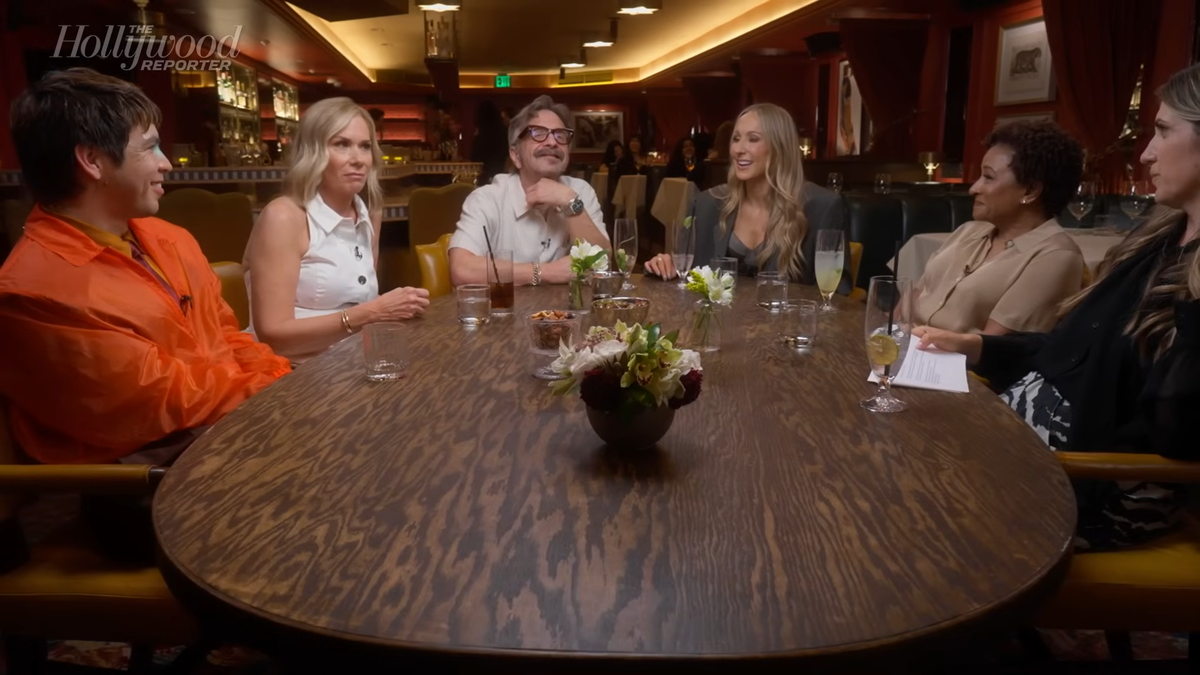
Hollywood Reporter Stand-Up Roundtable
There’s a maddening moment in this conversation between Nikki Glaser, Wanda Sykes, Marc Maron, Julio Torres, and Leanne Morgan where Morgan says that cancel culture was such a scary time where comedians were getting canceled by audiences who took jokes literally, causing her to worry that she might get canceled, but thankfully we’re past all that. Then Nikki Glaser chimes in:
I don't think we're past it, and I used to struggle with that too, but now I just think about if I got canceled, I would think, like, if I hurt someone's feelings and really did something wrong, I would apologize for it. I know I'm a good person that would do that. And then beyond that, I can't really do anything. So it's out of my hands. And then you look at yourself, if you're not a bad person who's operating in evil ways and you get canceled, it's not your fault. I just look at it as like, I can't control it. It's like, it just happened to me.
What are either of them talking about? Who were the people who got canceled by audiences who took jokes literally, and who were the good people who got unfairly canceled for things that weren’t their fault? (Other than Louis CK's victims and other people who spoke up about abuse in comedy, that is, who obviously aren't being referenced here.) It’s almost 10 years since Louis CK was exposed as a sexual predator and some of the biggest comedians in the business still have no idea what cancel culture actually was and who it actually targeted. Evidently they still think it was a Salem Witch Trials-esque moral panic over bad words—like the ableist slur Glaser used in the Roast of Tom Brady, helping to vault it back into mainstream usage—rather than a grassroots effort to expel abusers and bigots from public life. What a frustrating takeaway in a time where those abusers and bigots have been thriving for years in the same spaces these people inhabit; it sure would be nice to see a roundtable of comedians tackling that problem, rather than the one they made up in their heads.
 Seth Simons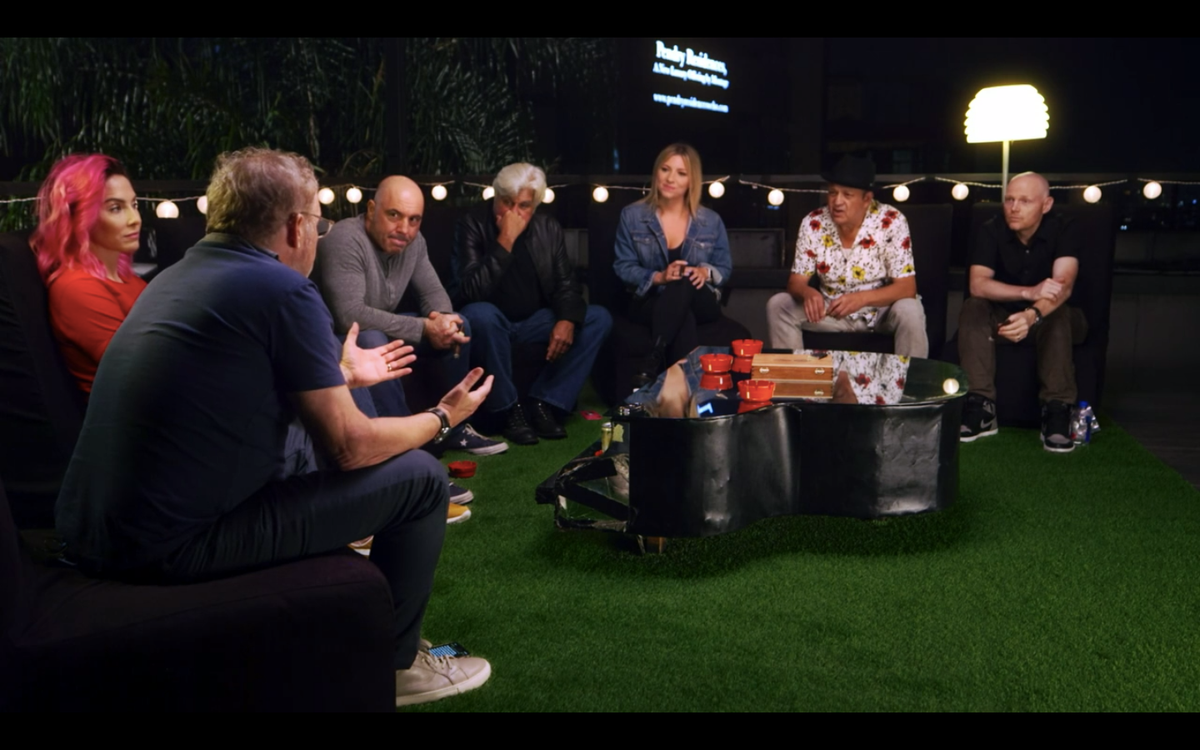
Ramy Youssef on Good One
Here’s Ramy Youssef arguing that the conversation about the Riyadh Comedy Festival "misses the point," because however valid the critics' critique of the festival may be, most of them rarely spoke out about Gaza or Iran, the war that hadn’t started in September 2025. Again I must ask: what are you talking about? Who were the people criticizing the Riyadh headliners who were not speaking out about other social issues? It seems to me that Youssef is adopting the straw man defense employed by Riyadh comics like Whitney Cummings and Dave Chappelle, who cast their critics as racists upset that they would perform for Arab audiences. As for the the actual criticism that it was hypocritical for comedy’s Free Speech crowd to sell out their values for a fat paycheck from the Saudi royal family, they responded (as Youssef does here) that all entertainment money is blood money.
Perhaps it is, but there remains a large and substantive difference between a) taking money from Jamal Khashoggi’s murderers to perform in a state-sponsored propaganda festival, and b) taking a percentage of ticket sales for a show at a venue owned by Live Nation, which, by the way, no longer has Gulf investment. Elsewhere in this interview Youssef says that his price to perform at the festival would be much less than the six-figure sums his peers received, because he really wants to perform for Saudi audiences. Okay, yes, great—why not do that outside the context, I really must stress this again, of the state-sponsored propaganda festival?
Youssef, I fear, is suffering from the common comedian ailment of reflexively defending his friends because they’re his friends. Still elsewhere in this interview he says Dave Chappelle is the greatest living comedian—“I don't think that anybody can relate with a person the way that they do with him; I think it's why when his jokes, people feel hurt by them, they're hurt more”—and that he doesn’t enjoy seeing Andrew Schulz and Tim Dillon lumped in with manosphere figures like Nick Fuentes and Andrew Tate: “Tim Dillon is clearly playing a character. He's very funny. He's very astute. He's very smart. I also did standup with him at The Stand in 2013, 14, 15, 16, 17. Andrew Schulz, same thing.”
 Seth Simons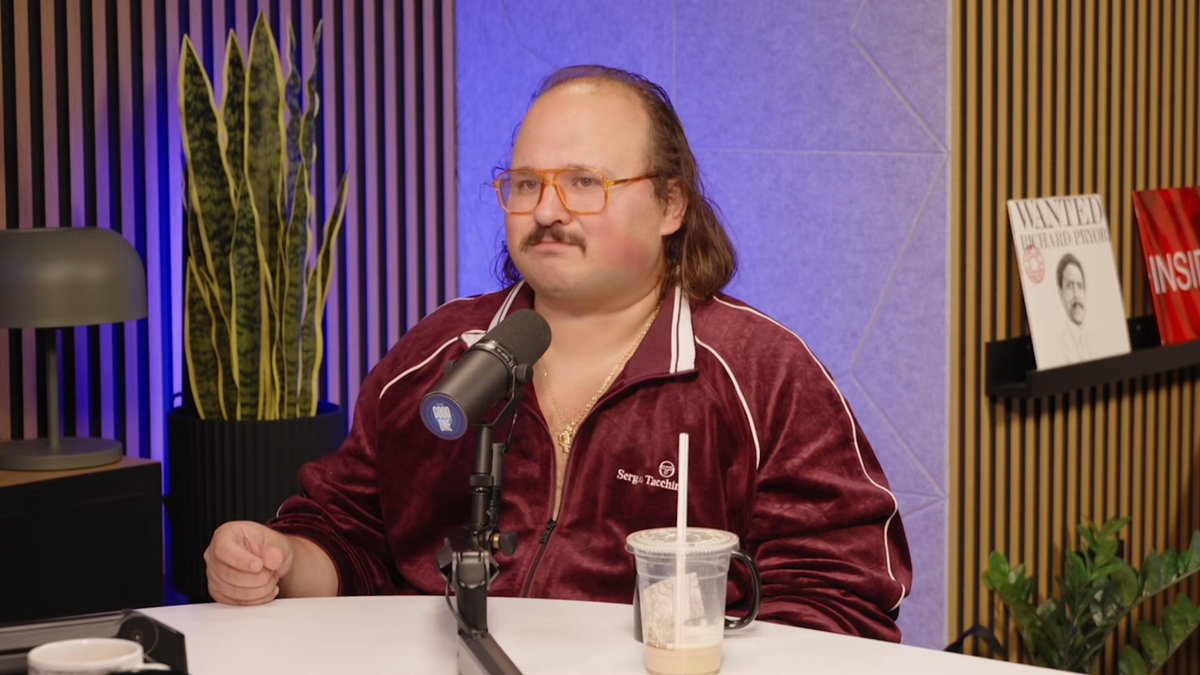
I’m reminded of Marc Maron’s insistence on maintaining collegiality with Tony Hinchcliffe and Stavros Halkias’ insistence that comics like Schulz and Shane Gillis aren’t actually racist bootlickers, they just have comedic personas that their critics would understand if we actually watched their content. No! Those guys are what the critics say they are, and the naïveté of ostensible progressive comics like Youssef, Maron, and Halkias allows them to launder their repugnant beliefs through the socially acceptable pretense of comedy. My kingdom for an interviewer who pushes back on these tired, baseless excuses.
Tyler Coates on Widow’s Bay
 Filmmaker Magazine and Tyler Coates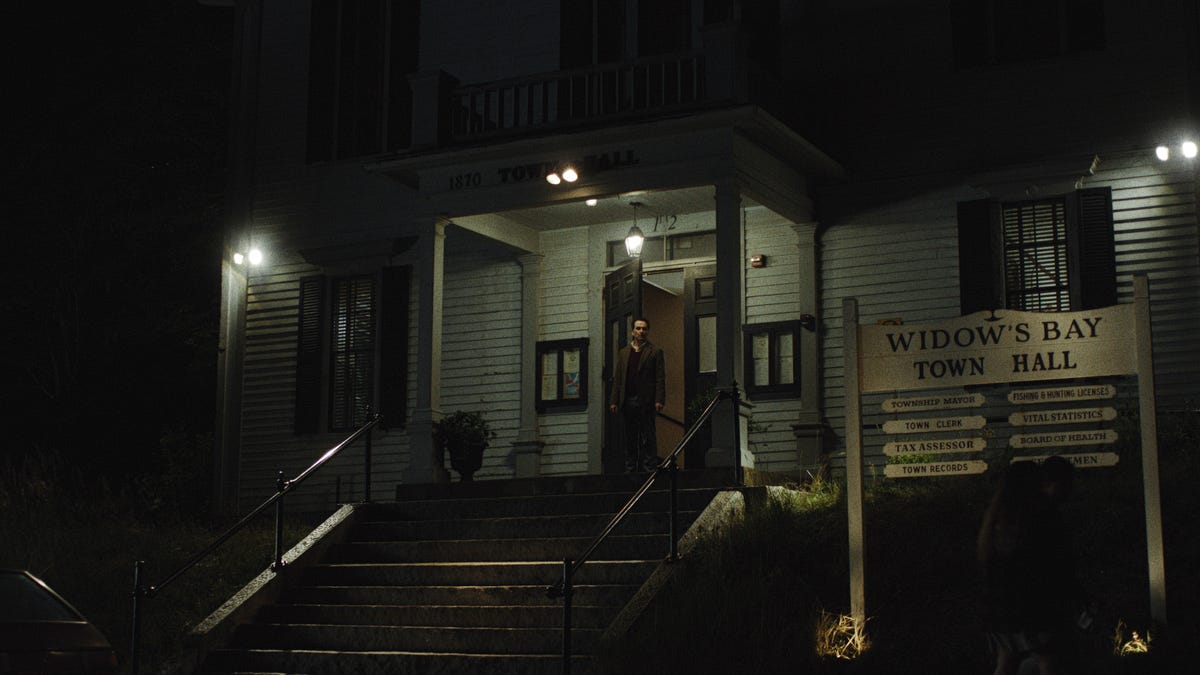
Although its supernatural elements are genuinely unsettling, Widow’s Bay is a comedy first, a horror show second. Much of the humor comes from the characters’ reasonable reactions to the outlandish supernatural elements haunting the island, such as Tom spending a night in the hotel to prove it’s not haunted (he’s wrong—even the innkeeper refuses to stay overnight) and later being stalked by the aforementioned sea hag (who smothers her male victims by sitting on their faces, which leads to a physical gag in which she’s propelled across Tom’s living room thanks to a well-timed reclining armchair). Like most great sitcoms, the real fun comes from watching characters navigate increasingly unhinged scenarios.
In fact, Dippold first wrote Widow’s Bay as a Parks and Rec spec script. “I’ve been thinking about this for 18 years,” she says. During that time—during which she co-wrote the female-led Ghostbusters and penned the Justin Simien–directed Haunted Mansion—the show evolved from a broad comedy to a series that deftly balances humor with horror, a blend that Dippold says comes from the collaborative process of making TV. “With features, you just write the script and you’re lucky if the director wants you on set,” she says. “Not being able to have much say once the script is in and [now] being in a position where I have all the say naturally made me someone who wants that collaboration. These actors are brilliant, the production design team is tremendous, and the directors who came in had other ideas that I would not have thought of. It’s thrilling to me, and I can’t imagine doing it in a way where it’s all my vision and nothing will ever change.”
Observational Comedy’s interview with Jacksonville comedian Daisy Tackett
 Isabelle Lichtenstein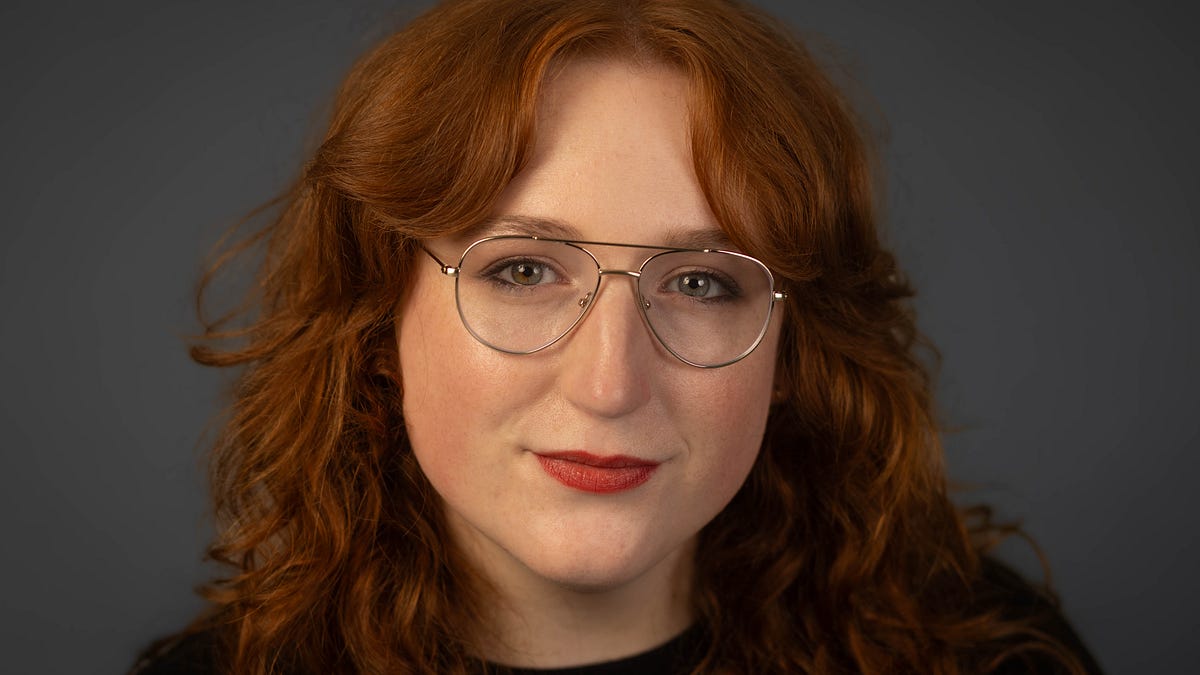
I mean, obviously, I would hope that everyone is uproariously laughing at every joke that I say. But, you know, I think the second best is if people really take a minute with it. Back to what I said about building in pauses: When I first started telling a lot of these jokes, that’s when I really was like, “Oh, I need to like build in a pause where I can stay quiet for 10 seconds,” because they’re processing, and then, finally, someone will break and start giggling, and then everyone will be on board. Recently, I haven’t been telling a lot of those jokes as much, because I’ve been hosting a lot, and that’s a real gamble to put in the host set. But when I’ve been working on headlining, that’s [the kind of] joke that I’ve been playing with its placement in sets. I used to do it at the very end, but then, if you lose them entirely, then that sucks — horrible way to get off stage. Sometimes, I did it in the middle, so then, I’d have to spend the rest of the time clawing them back, because you really don’t know how the audience is going to react. It’s such a personal joke that the way people react to it feels very personal, even though I know it’s not.
Hollywood, Gaza, and the Invisible Blacklist
 Mary Turfah
Israel’s genocide collided with Hollywood at a moment of exceptional vulnerability. The pandemic disrupted production, throwing the majority of the workforce into sudden, unexpected unemployment. The streaming boom had already begun to unwind, with investors no longer willing to ply the industry with money in hopes of replicating Netflix’s success. The checks had come due, with demands to turn a profit leading studio executives to pull back on the bonanza of new projects known as “peak TV”: in 2023, the number of scripted series on air finally declined, from a whopping 600 in 2022 to 516 in 2023. The 2023 writers’ and actors’ strikes, a response to the streaming era’s thinner paychecks and less stable employment—changes caused by streamers’ shorter television seasons, smaller writers’ rooms, and the loss of residual payments that accompanied reruns on linear televisions—accelerated the cost-cutting decisions studios were already preparing to make. By late 2023 and into 2024, thousands of workers across film and television found themselves unemployed or underemployed, with no clear sense of when—or whether—work would return.
No Bad Days’ interview with Alex Press about “Hollywood, Gaza, and the Invisible Blacklist”
 tasbeeh herwees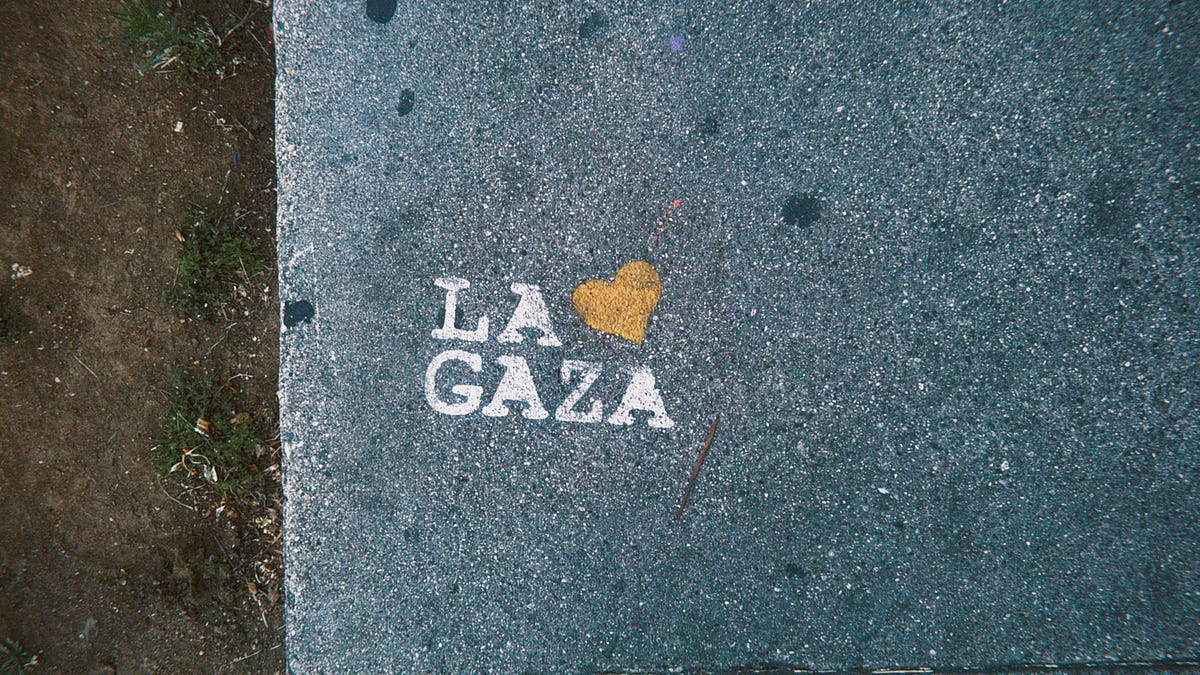
Part of why I wanted to write this—for Sara Yasin, a wonderful editor—is that I’d read all these Hollywood Reporter-style stories about someone being dropped or speaking out, and none of the coverage acknowledged the basic structural factor underneath it: the film industry is in free fall. As James Schamus says in the piece, there are 40% fewer jobs right now. That backdrop informs every action people across the industry take. If you’re in dark times in your industry—fewer jobs, no one hiring, productions and companies shutting down—you’re less willing to do anything that gives your boss a reason to let you go.
So I went through every conversation asking people whether precarity was shaping what they were willing to do, and whether they saw it in their peers. Everyone said yes, absolutely. No one had been asking them about the fact that speaking up courageously is very different in a booming industry than in one where jobs are being cut everywhere—you’re almost handing someone a bold-faced reason not to hire you.
But here’s what really surprised me: the precarity breaks two ways. I went in expecting people to describe a blacklist, a feeling of I have to be extra good, extra quiet. And there was some of that self-censorship, some swallowing of anger. But for others it broke the other way—a sense that there’s nothing left to lose. When your industry is being destroyed, what reason do you have to stay quiet about something as horrific as a genocide? That sentiment was especially strong among younger workers: I’m not going to get a job anyway, so why am I shutting up about this? That’s been missed in a lot of the coverage. It’s not all silence. There’s also a radicalizing sense you get from watching your industry crumble.
No, Artificial Intelligence Is Not Conscious
 Ted Chiang
If a company builds a machine that, when fed descriptions of assorted ethical dilemmas, emits sentences either of the form “Compromise your values” or “Don’t compromise your values,” it is not building a tool that assists people in their decision making; it is encouraging people to stop making decisions. The writer L. M. Sacasas has said, “Our technological systems, by nature of their design and the ideology that sustains them, are machines for the evasion of moral responsibility.” He was talking about social-media platforms, but his observation is, if anything, even more applicable to LLMs. Whenever a person delegates a decision to an LLM, they are trying to off-load accountability for that decision, and if a company that sells an LLM portrays the product as having a moral center, it is offering a way for its customers to abdicate their responsibilities.