"There comes a point where it's like, how much money do you fucking guys need?"
Updates and happenings.
I Did Some Podcasts
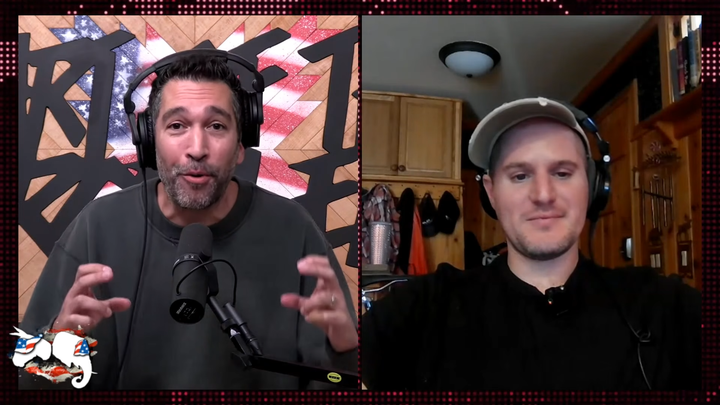
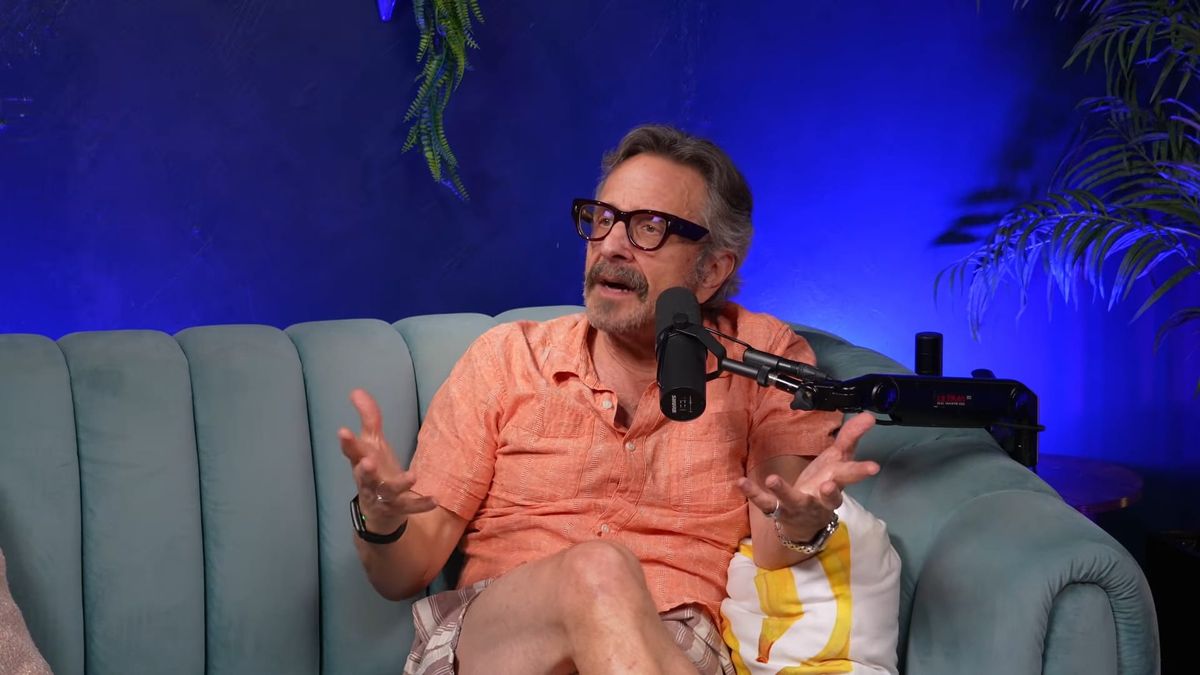
My friend Mary Houlihan kindly invited me on her podcast, The Mary Houlihan Show, to discuss comedy and comedy journalism. Thank you Mary. Watch our conversation here.
The good folks at Sequels 2, a podcast about hypothetical sequels to exhausted film franchises, had me on as well. Thank you to the good folks at Sequels 2. We imagined what National Treasure 3 might look like, and then a few weeks later Nicolas Cage confirmed that National Treasure 3 is in the works—sometimes dreams do come true. You can listen here.
Comedy Kingpin Sues Business Partner
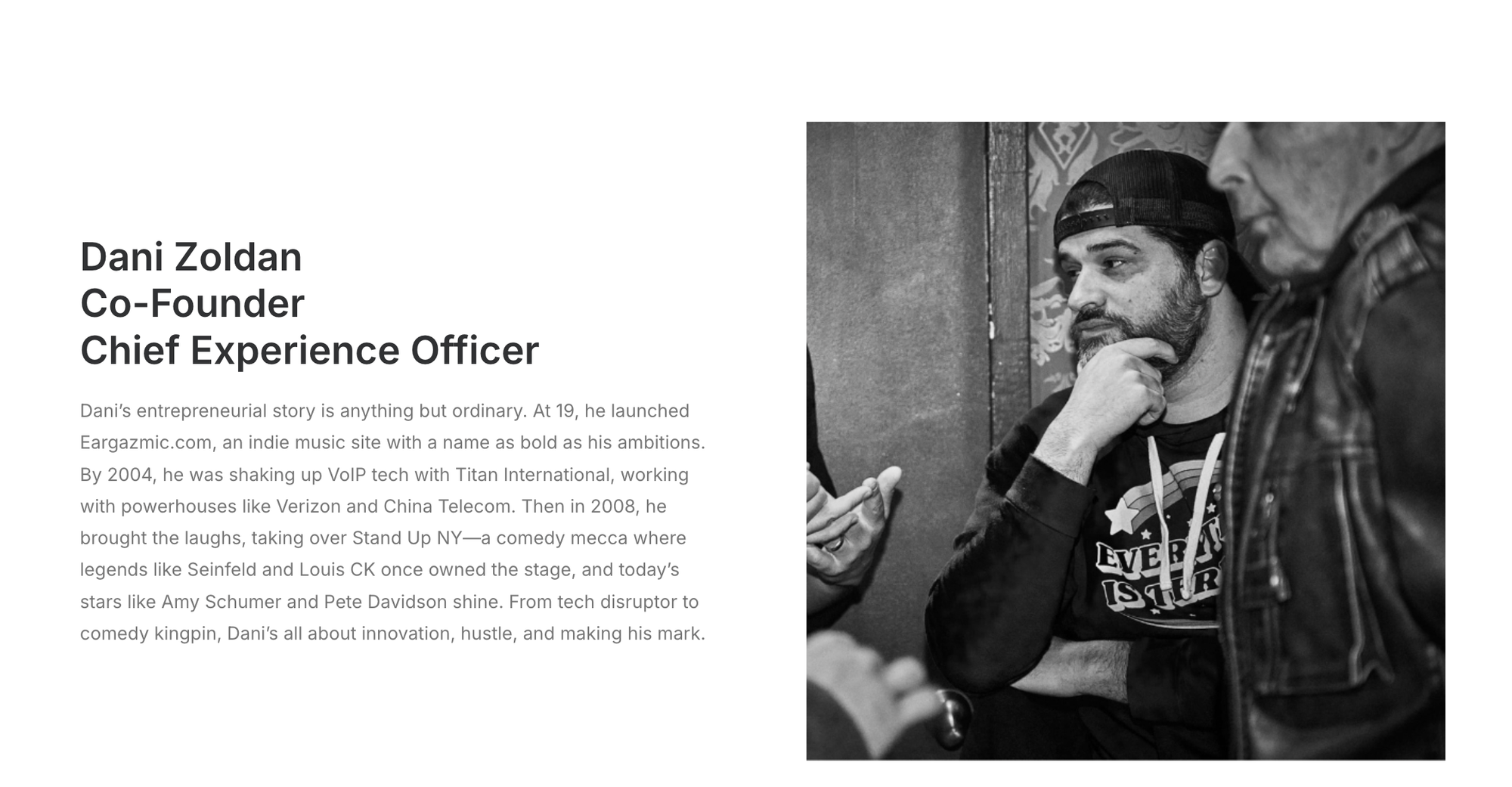
If you listened to episode 12 of the Humorism Evening Podcast, then you are caught up on the tax woes of Stand Up NY owner Dani Zoldan: as of this month, he and the legal entity behind Stand Up NY are collectively the subject of more than $1 million in unsatisfied New York State tax warrants. The most recent, a warrant against the club for $404,958.15 in unpaid sales taxes, was docketed on July 15.
Zoldan’s struggles continue: on August 20, he filed a lawsuit against his business partner David Rosenberg. The two co-own Brand Up Comedy, which connects comedians with brands that want to make funny content. According to the company’s website, its clientele includes BlueChew, luxury clothing designer Ramy Brook, Manischewitz, Manhattan Mini Storage, and supplement company Controlled Labs.

Zoldan's complaint alleges that Rosenberg transferred all the money in Brand Up’s bank account—a little over $23,000—into his own, closed the company account, locked Zoldan out of its digital assets, and started a new company that does basically the same thing: Crowdwork Creative. He’s seeking damages for lost business, reputational injury, and payment for mid-job engagements.
Interestingly to those of us who have been following Zoldan for some time, the lawsuit offers a glimpse into Brand Up’s finances: Zoldan asserts that the company has generated $520,000 in revenue since forming in 2023, roughly $100,000 of that in the first five months of 2026. There’s no documentation for that figure, although it is sworn under penalty of perjury. The complaint also doesn’t indicate how much the company has made in profit, to which Zoldan is entitled 50% under its operating agreement.
Still: not bad for a three-year-old branded content shop, eh? I’ll keep my eye on the case and let you know what future filings reveal.
More Good Stuff from Maron
Marc Maron had some characteristically insightful things to say about the antiwoke comedy crowd on the podcast Trash Tuesday, hosted by Khalyla Kuhn and Esther Povitsky:
Povitsky: Sometime last year you had a big run on all the—you were on a big press tour and you were going off on all the—
Maron: Oh, the guys?
Povitsky: Yeah. Where are you at now with that?
Maron: It seems like some of them have sort of rethunk it a bit, but I don't know that I can really—mostly Tim, and I feel like Andrew has kind of rethunk it. I don't expect Theo to rethink much, and that's not a slag on him. And I think Joe knows where his bread is buttered, but I think that—my problem was with their politics. I mean, I know all those guys and I was clear about it and I still feel that way, but what's done is done. And now what do you really expect? I mean, Tim has been sort of surprising in that he is sort of like, "We fucked up and this guy's bad news and he's conning everybody."
"They're fundamentally not political people. They're not following the narrative."
Povitsky: But don't you think they all always knew? How could anyone not always have known that?
Maron: I really think that a lot of people don't have a worldview. They react emotionally and also they're looking to do what's best for them. But I really don't think—in order to really get from, "I want to say tranny, I want to say retard, and that's what I'm gonna vote for, I'm gonna vote for anti-wokeness so I can have the freedom to do that," and to get there, from there, to realize they're gonna use that as an umbrella for all the policy necessary to dismantle liberal democracy, on all levels, under that anti-woke umbrella. For them to know that that was going to happen would take a worldview. And would take an engagement with what these guys wanted to do politically in the big picture. And I don't know that they did that.
Kuhn: Yeah. They cherry-picked what was convenient for their own personal thing.
Maron: They're fundamentally not political people. They're not following the narrative, and they're not necessarily—they'll react to stuff, but I mean, there is something that's been going on for decades between the right and left. There's a lot of things that I had to get hip to when I was at Air America to sort of follow the narrative. And then once you get conspiracies and alternative sources of things where everything becomes dubious to you. Like, "Well, that's not true. Where'd you get your information?" If you can say that to anything and there's no barometer for what truth is or what it isn't, then you're in some other fucking world. You're living in a conspiracy theory.
Povitsky: It's frustrating because I look at this, I'm like, what's worse—that these people were so evil and selfish or that they were actually just that stupid? And I don't really know which one it is.
"I started with a lot of those guys, and it's like, we were just broke people that wanted to be artists."
Maron: I think that once you get into the 1%, your life is that. So once you sort of look at all these guys jockeying for position in the 1%, hundreds of millions of dollars, you're talking a lot of money. So whatever goes on at the Kevin Hart roast or whatever racist thing they say, they're still flying far above the world and the average person and the average person's problems and concerns. They don't have any of them. None.
Kuhn: But they don't have a recollection of the grind or the early years?
Maron: No, because—I don't know what their life is or it's all about success, but their day-to-day challenges, they might as well be on Mars. And it really is an insulated world that is about success and about numbers. And then also someone like Tony, he likes the role of being the villain. And what does that mean? And I think he likes Trump for the same reason, but who's running this country and what's really happening and how is it all coming unhinged? And the fact that we don't even have enough infrastructure to stop an outbreak of diarrhea virus—when does it impact guys who are so rich that they don't have to live on the planet anymore? I don't know. But it's like, look, I'm not broke and I'm not working a manual labor job, but I am empathetic to the struggle of people that are marginalized or minorities or in a certain type of trouble. And I do think that you lose a lot of what makes America amazing if you're all about white culture.
"There comes a point where it's like, how much money do you fucking guys need?"
Povitsky: Yeah. I personally feel so confused where I sit now because I'm like, I started with a lot of those guys, and it's like, we were just broke people that wanted to be artists. The antithesis of that.
Maron: Comics.
Povitsky: Yeah. Well, yeah. But it is art. It is art.
Maron: I get what you're saying, but there are people that get into it for the big prizes. I'm not a person that generally thought about money and I still don't. I had something to say. I still kind of feel that way. I'm happy that it worked out and I made some money. There was nothing I put in place to make that happen. There was no forethought to it. I lucked out. I was there at the beginning of something that coalesced around me and it worked out for me, but I didn't have a plan to make money and I still don't. I'm happy I did because it makes my life easier. And now that I have it, I do feel like a success in that way. But there comes a point where it's like, how much money do you fucking guys need?
Povitsky: I think my point is just like, people who are creative and who are people that get onstage to express how they feel, it doesn’t make sense to me that they’re also Republican. Like that’s just—
Maron: I don’t think that there is a lot of creativity, necessarily, to having a point of view about a thing, right? These aren’t poets. You’re not talking about 20 Brent Weinbachs. You’re not talking about Chris Fleming, you’re not talking about Maria Bamford, you’re not talking about people who that's way high and way unique and way different and you're really like, “I never looked at it that way. You’re doing something above and beyond.” There are artists within what we do. But most people are just looking for people to listen to what they have to say and to get as many people as possible to give them money.
"Who wants that? Do our comedy peers not want us to have infrastructure?"
Povitsky: Right, right. Make the drunk people laugh.
Kuhn: Speaking of the diarrhea outbreak…
Maron: This shit happens because—it always seems to happen, but the fact that the government cutbacks no longer have infrastructure to track these kinds of outbreaks. They cut everything. They took all the money out of the government to give it to rich people.
Povitsky: Who wanted that? Who wants that? Do our comedy peers not want us to have infrastructure?
Maron: Not have hygiene, regulation and medicine? Good question.
Kuhn: But to your point, if you don’t have a worldview, you’re not thinking that far ahead.
Maron: And also you’re not buying shit at places where you’re gonna get sick. And also you don’t have to worry about seeing a doctor. And also you don’t have to worry about being infected by things that you’re gonna get at Taco Bell. Your worries are different, man. They don’t even have to worry about getting sick on a commercial airline.
I think those are some really important ideas they get at, ones that I stressed in the podcast this week: the comics in the Rogan/Schulz/Dillon movement are generally not interested in making art in the way that comics outside of it are. They’re interested in using comedy as a way to say the unsayable thing and make lots of money doing so. For Tim Dillon, comedy is a means of expressing his belief that white culture is superior. For Andrew Schulz, comedy is a means of saying that women and Asians are bad drivers. For Tony Hinchcliffe, comedy is one weird trick that lets you say Puerto Ricans are filthy on a national stage. I’ve said it many times before, but it's why I put little faith in the notion that comics on Maron’s side of the aisle can reach out to the Rogan crowd’s audience and persuade them, somehow, to see the light. I just don’t believe those people go to comedy to find new ways of thinking. They’re in it to feel superior, to enact their feelings of hostility towards women and people of color and the poor. They might as well be speaking a completely different language.
More Terrible Stuff from Dave Smith
With that said, please enjoy Dave Smith’s argument against universal healthcare:
Smith: I saw Shane Gillis saying on Rogan's podcast the other week, he's like, "No, dude, communism sucks, but healthcare, free healthcare, that's not communism. That's cool." And it's like, well, okay. I mean, look, dude, yes, it certainly is true that just because you have socialist healthcare, that doesn't mean you're going to be a full communist country. So okay, that is true. There's lots of countries with universal healthcare that aren't full-fledged communist countries. So that is true. You could have a healthcare system that's run by the state and not have everything else be run by the state. However, universal healthcare is a bad idea for the exact same reason that communism is a bad idea. Yes, it'd be much worse to have the state run everything than to just have the state run healthcare. But having state-run healthcare is bad for the same reason that having state-run everything is bad.
And these guys, they all—I don't know, Rob, they sit there and they go, "Well, look, we don't have universal healthcare, and we have our system—" whatever, they'll say things, what do they say, Rob, "and we get worse results." Right? "We don't have universal healthcare and we pay more for medical care than other countries who do have universal healthcare. And we're sicker. "
But all of that is like, this is how leftists argue. None of it is even linear. It doesn't even follow. It's like, first of all, we're not sicker because of our health insurance system. That is not what's making people in this country sick. People are sick because of what they're eating, what they're ingesting, the toxins around them, all types of different reasons. But the major ones are over-processed food, smoking, drinking, drug use. Those are the major things. And all types of lifestyle things. So the fact that we're sicker isn't necessarily a result of our health insurance system. It's much more a result of our agricultural policy, of our big pharma policy, of our—a whole bunch of different things.
And then paying more from it. It's like, okay, fine, but dude, talk to people in countries where there's universal healthcare. They have all the same type of problems that—they have the exact same problems with healthcare that Mao's China had with food, but it's because Mao collectivized the means of production of farming, or he collectivized the farms themselves, and you're just collectivizing the means of production of healthcare. They're in the exact same problem. Shortages, long wait times. Go talk to somebody from Canada who needed ankle surgery. Talk to them about the wait times they have for normal doctor visits. By the way, our system sucks, but yes, actually socialized healthcare is bad for the same reason that socialism is wrong.
Some Funny Cartoons
I continue to enjoy Felipe di Poi’s Bad Therapist Show: