Sunday Reading: August 16, 2026
Ft. Amy Zimmer, John Wilson, Stephen Root, and more.

Please accept my invitation to follow the Humorism newsletter’s Instagram account before I launch it publicly. Why Instagram? Because the gods of content demand it. Join me on that platform for visual and audiovisual alternatives to the text-based journalism you find here. Here’s the link again. Click it!
Did you miss yesterday’s piece about the fruits of my FOIA research into Lorne Michaels’ interactions with the Obama administration? How about Thursday’s new episode of the Humorism Evening Podcast, about New York State’s $1.1 million in open tax warrants against Dani Zoldan and Stand Up NY? Or my other Thursday piece about Tires star Shane Gillis? It’s been a busy few days here on the Humorism newsletter, but that hasn’t stopped me from curating some other reading for you too, including:
-Some thoughts on the right-wing “vibe shift” from Vincent Bevins and John Ganz;
-A really interesting interview with comedian and Blue Heron star Amy Zimmer;
-A delightful and insightful Vulture profile of John Wilson;
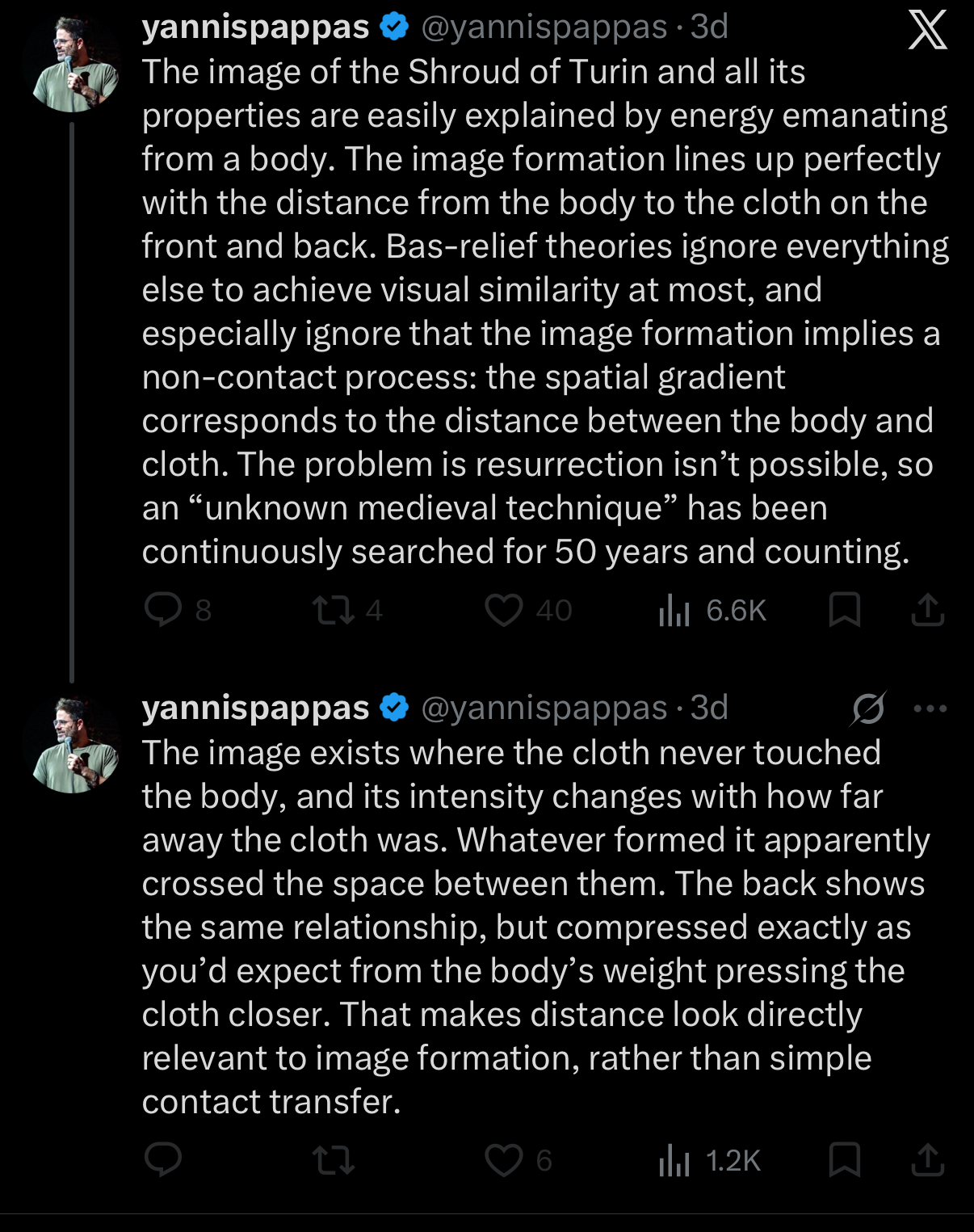
-The latest on Yannis Pappas’ Shroud of Turin obsession.
Okay, here you go:
Vincent Bevins on Elon Musk’s Masterful Gambit
The “marketplace of ideas” is a myth, but the dialectic is real. Given conditions of widespread and equal participation in public discourse, some ideas will win out through argumentation. If the media landscape were a simple reflection of economic power, there would be no point for us to do much of anything. Of course, it is not. The press has been a powerful revolutionary force over the last five centuries. But it is also possible to simply buy a newspaper or a website and make it illegal to make fun of the owner or oppose his business interests. That is why control of the press has been a vital political struggle over the last five centuries. It is folly to think that Musk was going to be made a fool on his own property, or that Jeff Bezos would buy Washington Post and allow the paper to get in the way of his larger business goals.
John Ganz on Vincent Bevins on Elon Musk’s Masterful Gambit
I do think one thing Bevins understates a little bit the political downsides in creating one of these hall of mirrors, which we can see clearly on display now: the people inhabiting these publics think they are broadly representative of the world at large, rather than quite subcultural. The X-ing of Twitter made the Trump administration and right-wingers more broadly think they had a mandate for their most extreme ideas because they only saw a world of chuds staring back at them. The opposition also risks becoming demoralized because they also see this world of total idiocy.
Larry Fitzmaurice 🤝 Amy Zimmer
Well, the channels for comedy have morphed drastically in 10 years, or even five years. COVID changed the landscape for and consumption of comedy. People seem to be much more interested in it, and there's much more comedy to go around. But it all goes back to the form in which people are taking it in. I've been making funny videos and posting little things on Instagram, but now there's whole businesses around viral videos. So much of the scene I was a part of was almost barely recorded, and that's almost a point of pride, which is pretty arcane in hindsight.
People build themselves towards the result of trying to make a living in comedy, which is changing all the time and very difficult—so people attach their work towards short-form content. And I don't think there's anything wrong with that. But you learn to exercise all these different muscles with more time, and there's plenty of young creators who are doing it. But people's output is attuned towards that. It used to be that getting on late-night would change the course of your trajectory, or get you staffed on a show. All of those metrics have changed, so people are just trying anything they can—and they're not wrong for that.
Fran Hoepfner 🤝 John Wilson
The day’s unpleasant winds eventually drive us indoors to the nearby, and aptly named, John’s Coffee Shop. Wilson, straight-necked and with a hand always resting on his camera, looks like a cowboy at high noon. He’s still on alert for B-roll, but to point something out to him is to subject yourself to polite judgment. When I gesture at a peculiar group of tourists, he observes them but appears obviously unmoved. In How To’s third-season episode “How to Watch Birds,” Wilson confesses a hunger for what he calls “rare images,” the kind of footage that would be impossible to get if you went out seeking it — like spaghetti on the back of a pigeon or a stranger suddenly disappearing into a garbage enclosure. In the episode, Wilson fights off a nagging desire to simply concoct rare images and pass them off as “real.” In a modern landscape full of dwindling original sentences and AI-generated pictures, isn’t everybody trying to dupe everyone? But he resists and somehow continues to find both naturally occurring rare images and rare people.
“I’m able to suss within about five seconds whether someone is going to show me their real self,” Wilson says of his approach to interviewing his strange-yet-friendly subjects, from a wine-making street cleaner who blasts chewing gum off New York City sidewalks to a geologist specializing in global sand scarcity. And more often than not, these people do open up to him, sharing personal stories and controversial worldviews — like the aging rocker in The History of Concrete who claims he coined the name Chainsmokers and speaks openly about the unsuccessful suit he filed against the EDM duo. Wilson attributes his success to the fact that his camera isn’t a phone. “When people see you’re filming with a phone, they think it’s going to embarrass them. People assume it’s going to be used to incriminate,” he says. “People don’t have a preconceived notion of what I’m doing.”
The LA Times on Stephen Root
“Everything I do these days I want to do with an excellent script, and you can play from there — and this was an astonishing script,” Root says. Originally written as a “Parks and Recreation” spec (Dippold eventually wrote 31 episodes of the NBC sitcom), “Widow’s Bay” naturally evolved from broadly comic to something more nuanced and more horror-driven. The characters in particular are more grounded, which immediately piqued Root’s interest. “There’s this familiar territory, but it’s done in such an original way and so truthfully,” he says. “As Matthew says, you can’t go wrong because all the comedy comes from character, and all the horror comes from real horror. There’s no need to juxtapose them; they come out of truthfulness.”
The New Yorker on Coyote vs. Acme
Forte has always had something of a cartoon-ready constitution, with his rubbery physicality and goofball charm. His performance here is all sheepish grins and Gumby limbs, jutting out of a tan suit that, juxtaposed with his scraggly dark hair, makes him almost a visual correlative to the brown and beige of Wile E. Coyote himself. Both characters are deeply acquainted with the stench of failure. The crucial difference is that Kevin has allowed it to define and crush him, whereas Wile E. sees it as a source of renewal—a kind of reverse Kryptonite. This lean, mean, yellow-eyed desert canine remains among the leading optimists of his era, and “Coyote vs. Acme” casts his back-to-the-drawing-board tirelessness, his single-minded pursuit of his obsession, in unabashedly heroic terms. More than once, the script references Sisyphus, one of the few characters in fiction who can rival its protagonist for bad luck with boulders. Even when he’s holed up in a fleabag motel in Albuquerque before and during the trial, Wile E. has no use for downtime. As industrious as ever, he spends night after night poring over blueprints and devising Rube Goldberg machines, including one to insure that Kevin, snoozing away next door, will be awake, dressed, and ready to go in the morning. Genius never sleeps.
The New York Times on Some Actual Cancel Culture
The documents further detailed an expansive covert surveillance operation in which undercover agents spied on protesters and organizers at meetings held online, as well as in libraries, parks and churches, taking down not only what they said, but also their names and sometimes license plate numbers. The undercover agents also infiltrated group chats on Signal, listening as activists discussed coming demonstrations and their political opinions.
So far, none of the organizations targeted by the homeland security inquiry, conducted with the U.S. attorney’s office in Minnesota, have faced charges. And yet, as the investigation moved forward, prosecutors showed grand jurors a PowerPoint slide asserting that 18 groups — including the A.F.L.-C.I.O., the country’s largest federation of labor unions — were part of a conspiracy to impede the work of immigration officers in Minnesota.
Ultimately, that supposed conspiracy led in June to the indictment of 15 people accused of interfering with law enforcement agents as members of the far-left movement known as antifa.
ProPublica on Wall Street Defunding Charities
But ProPublica found that Fidelity and DAFgiving360 appeared to apply their policies unevenly. Even though they froze donations to the SPLC, they allowed numerous other groups to keep receiving money amid government investigations. The cases included hospitals, universities, charter schools and even a white nationalist organization.
The sponsors say their decisions are viewpoint neutral, and ProPublica found no evidence to the contrary. Removed groups spanned the political spectrum. But most of the ones that spoke to ProPublica shared one common experience: silence from the sponsors.
Months after being deemed ineligible for donations, the SPLC still doesn’t know why the action was taken or whether there is a path to reinstatement, according to a source familiar with the matter. The legal pressure, however, continues: A former employee was indicted this week on charges related to the case.
Experts say this is particularly problematic under the Trump administration, which has a track record of making politically charged accusations that don’t hold up in court.
Yannis Pappas Update
Thank you for reading, and seriously, please do follow the Instagram account. It'll be fun!