You'll Never Guess Which Podcasters Took Ad Money from a Trump's Allies
And a few thoughts about podcasters' role in the rise of RFK Jr.
Yesterday Puck put out an illuminating poll that attempted to quantify podcasters’ impact on the election. In short, they had… some:
Echelon did find a small but meaningful gap between how voters learned about Trump and Harris in the media: podcasts. Only 14 percent of voters said they learned information about Harris from a podcast, but 23 percent said they heard news about Trump from a podcast. That’s likely a reflection of how central podcasts have been to Trump’s media strategy for years, whereas Harris only leaned into audio later in her abbreviated campaign. Among voters who heard Trump on a podcast, 55 percent said it influenced their vote, compared to 44 percent who said it did not.
Echelon also asked podcast listeners if they saw or heard Trump on a specific podcast or livestream in the run-up to Election Day. Among those who did, 72 percent said they saw or heard Trump on The Joe Rogan Experience, which is probably not surprising given Rogan’s distributed reach across platforms. Others said they saw or heard Trump do interviews with Theo Von (17 percent), Andrew Schulz (14 percent), or Logan Paul (14 percent), but Rogan’s reign in the podcast space remains unchallenged.
Maybe it’s not terribly surprising, but I’m still struck by that differential between the percentage who encountered Trump on JRE versus other podcasts. In an episode with Tim Dillon after the election, Rogan himself claimed that the interview has more than 100 million views across Twitter, YouTube, and Spotify, which doesn’t seem too implausible—as of today, it has 51 million on YouTube alone. Theo Von’s, meanwhile, has 15 million, while Andrew Schulz’s has 8.5 million. Rogan really does have incredible reach.
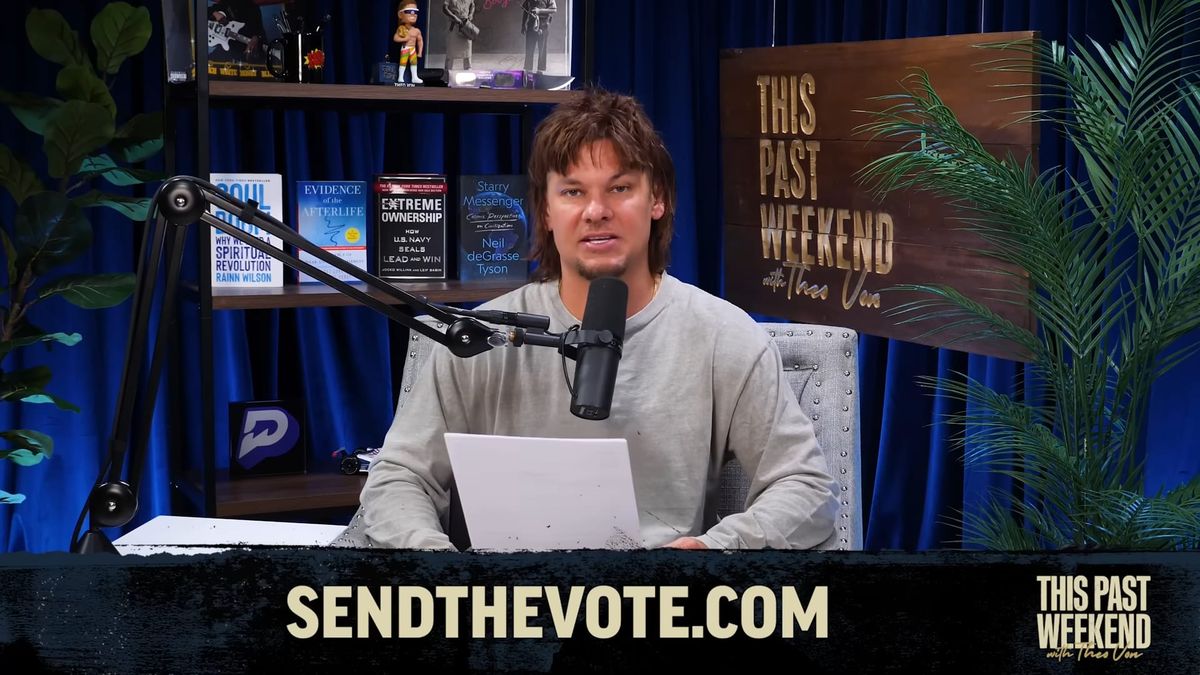
I wrote a few weeks ago that this election should do away with any notion that comedy’s right-wing podcasters are, somehow, apolitical. Today I will add to this an interesting fact that I’m embarrassed to admit I’d missed: in the days and months leading up to the election, some of these podcasters took ad money from a get-out-the-vote effort closely aligned with the GOP and the Trump campaign.