"You have to accept that Ireland is gonna become Pakistan or you gotta deport a whole bunch of people."
A few tidbits about Louis CK, Marcello Hernández, and Dave Smith.
Welcome to a brand new edition of the Humorism newsletter. Below you’ll find:
-A few thoughts about a recent New Yorker article about Louis CK;
-An inside look at an SNL star’s wallet;
-Dave Smith’s latest white nationalist screed.
But first, something else: I forgot to let you know back in October that I had a new poem out in the journal Quarterly West. It’s called “The Symposium” and I think it’s a fun one—a little something for everybody.
Okay, on to our usual programming:
In a recent essay in The New Yorker, Tyler Foggatt ponders the “strange place” Louis CK holds in American culture: he has enough sway to sell out multiple nights at the Beacon Theatre, but not enough that cultural critics can write about him without mentioning the sex crimes. Isn’t that so very odd? His current hour, the one he recently performed at the Riyadh Comedy Festival and shot for a Netflix special set to drop later this month, is “one of his strongest standup routines in years,” but for some reason he hasn’t quite reclaimed his former cultural glory. Here’s the most interesting part of the essay, to me:
Comebacks are trickier for some than others. Even at the height of the #MeToo era, we decided that some people were candidates for eventual rehabilitation, and then we set them aside for later, like incomplete tasks. But we haven’t figured out what, exactly, that comeback process should look like. A public apology is required. Then that person should probably go away for a while. (We seem to imagine that the cancelled person is roughing it in a basement somewhere, “Bugonia”-style, when it’s more likely a private island–yoga–wellness spa, or, like, New Hampshire.) While they’re gone, they might want to get some form of treatment—therapy, rehab. Then, after we’ve forgotten about their existence, they should offer us a great work, channelling the worst things they’ve ever done, their overwhelming guilt and shame, and their newfound clarity into the finest content they’ve ever made.
My first response to this is: who’s “we”? I don’t remember anyone deciding any of that, and I also don’t see why it would be the general public’s prerogative to “figure out a comeback process” for outed sex predators. My second response is: why would you expect an outed sex predator to offer a great work channeling the worst things they’ve ever done into the finest content they’ve ever made? Has any outed sex predator ever done that? I can't think of any obvious precedent, but by all means correct me if I'm forgetting something.
My third response is: that’s exactly what Louis CK did before he was outed as a sex predator. He spent the 2010s channeling his overwhelming guilt and shame into a beloved FX series and multiple award-winning standup specials. When the New York Times piece came out in 2017, he was one week away from the release of I Love You, Daddy, more or less a tribute to Woody Allen that arose out of a prior, failed collaboration between the two. What the exposé revealed is that Louis CK’s great skill was turning his abuses into art; what it forced us to ask is whether the art was worth the abuse.
Apparently a lot of people, including critics at our most esteemed publications, think the answer is yes, yes it was, so much so that they’d like him to do it again, to make another work of art so good that it leaves them no choice but to forgive him. The only problem is he’s not performing for them anymore; he’s performing for the people who forgave him years ago.
 Seth Simons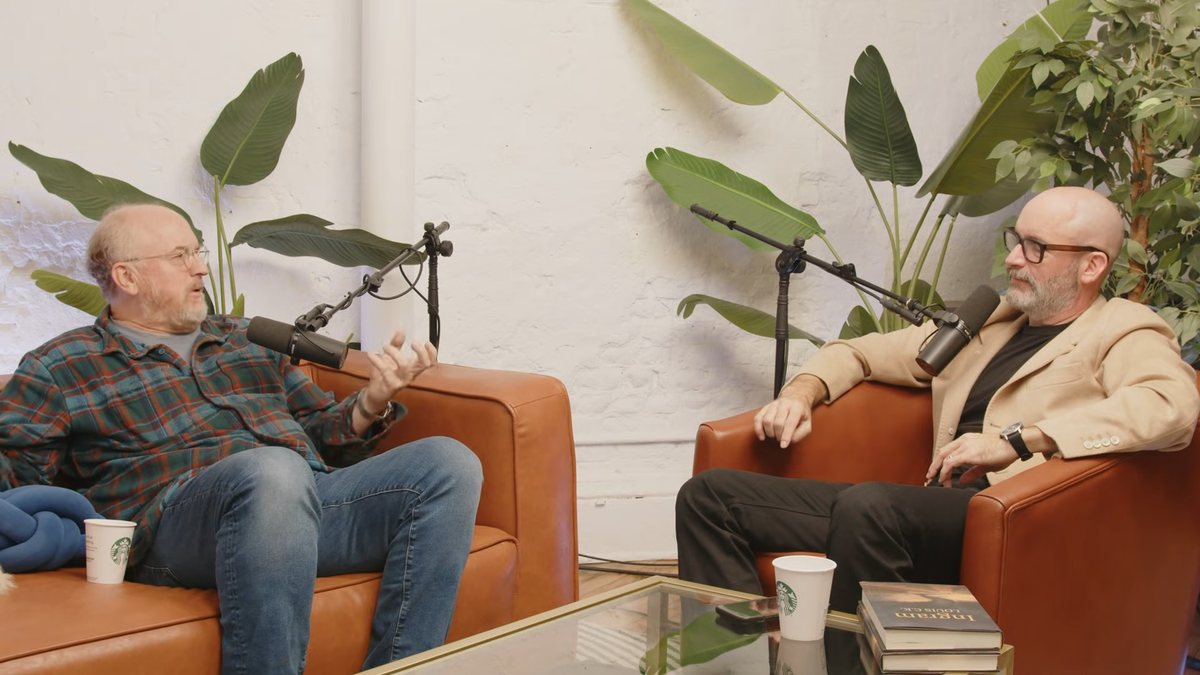
When I saw that Marcello Hernández performed at the University of Maryland’s homecoming festivities in October, I immediately sent UMD a public records request for their contracts with the SNL star. Why? Because I’ve previously found UMD’s legal department incredibly responsive and pleasurable to work with, and also, as always, I’m curious how much money comedians are making these days. I’ll admit I was a little surprised by what I learned: Hernández, supported by openers Matt Richards and (SNL featured player) Tommy Brennan, commanded a fee of $150,000 for his shows. That’s the same fee Colin Jost got from UMD in 2022, with Hernández and Molly Kearney as his openers. By that point, obviously, Jost had a much longer and more distinguished tenure at SNL under his belt, but I guess people really love Domingo: whereas Jost’s fee was for two shows, Hernández just did one.
For a little more context, here are the fees UMD has paid other homecoming performers in recent years, per its general counsel. In 2021, it paid Jimmy O. Yang $61,000 and Aristotle Athari $12,000; in 2020, it paid Hasan Minhaj $60,000; in 2019, it paid John Mulaney a whopping $175,000; in 2019, it paid Ilana Glazer $30,000; in 2018, it paid Ali Wong $100,000; in 2017, it paid Hasan Minhaj $70,650 for two shows; and in 2015, it paid Hannibal Buress $60,000. Nice work if you can get it.
 Seth Simons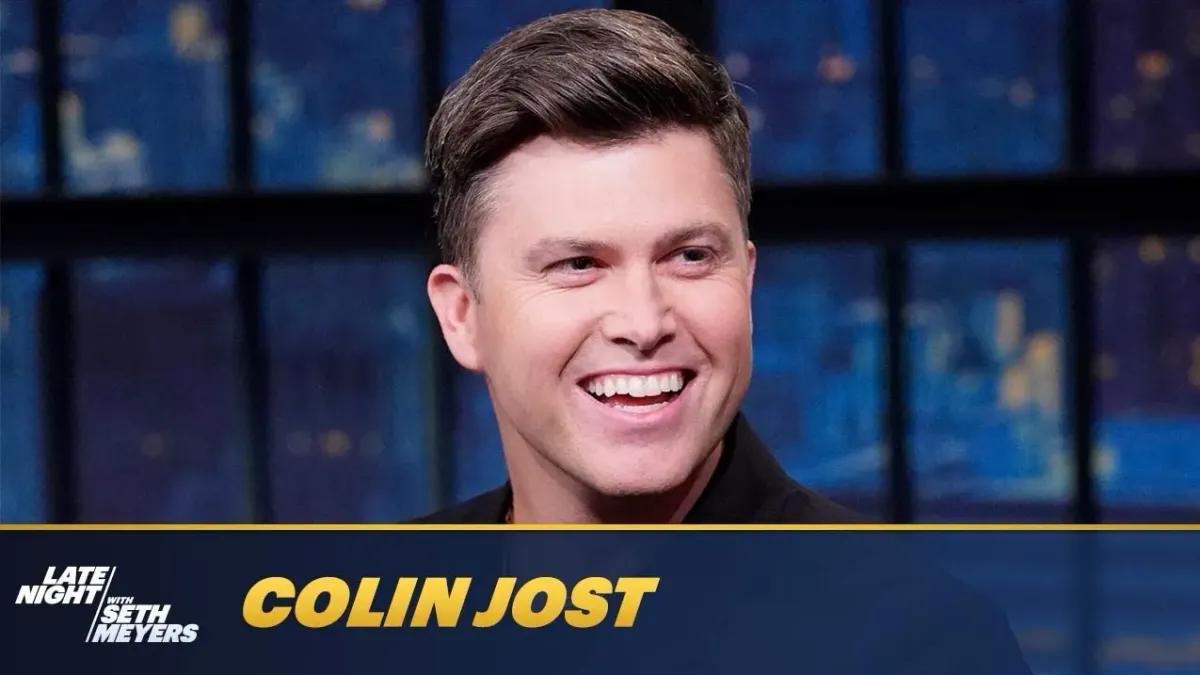
So long as we’re here, I can also tell you how much money Louis CK made at an August show in Asheville, North Carolina: $117,013.99. I’d say he’s doing pretty well for himself.
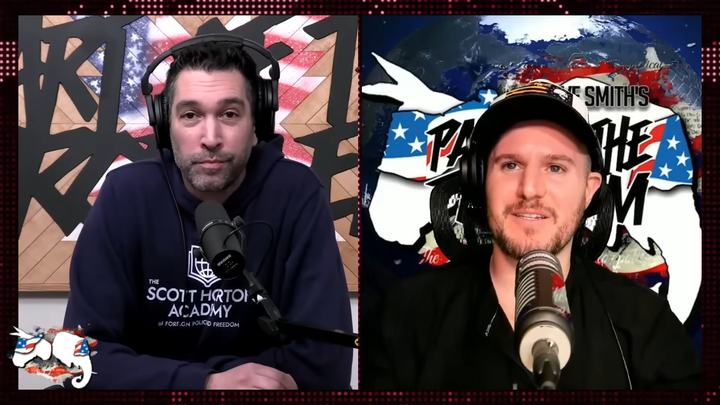
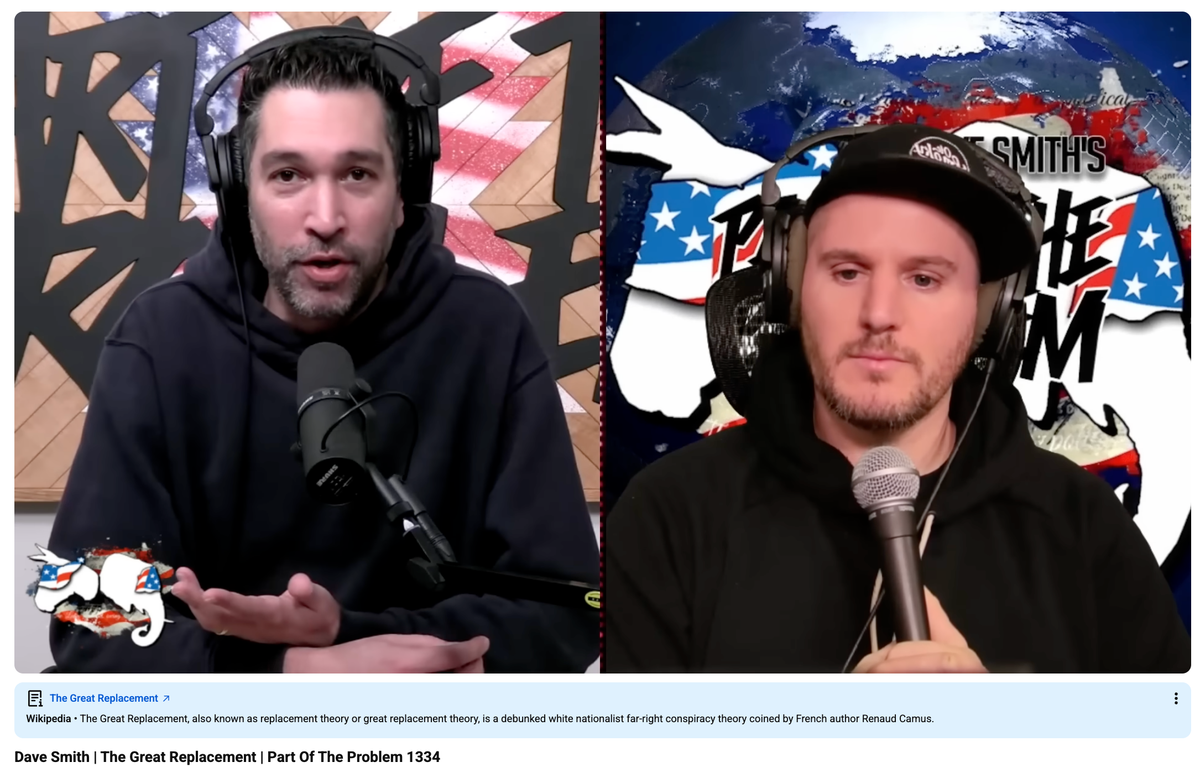
Our friend Dave Smith took to his podcast this week to complain, once again, about immigrants replacing good old American whites. He was ostensibly responding to a monologue (sorry for the indirect Fox News link; for obvious reasons, only right-wing media found this notable enough to cover) by New York Times columnist Wahajat Ali—essentially arguing that immigrants aren’t going anywhere and white people have to deal with it—but he of course took the opportunity to get super racist about it. A few passages for posterity:
There's this major seismic shift that's going on across the western world right now, and yet it doesn't get discussed nearly enough. And because of the kind of, I don't even want to say "woke," but just like the broader, the politically correct culture that we live in, that we have lived in my entire lifetime, where there's a severe allergy to anything that could even be considered bigoted. Now that's changed a lot in the age of the internet and with the rise of the Gen Z who are kind of not playing by those rules anymore.
But nonetheless, that has been the dominant culture for a long time. And so it did kind of paralyze people to have conversations about any of these things. And the dynamic that I'm talking about is that basically throughout the entire western world, and I guess this is not true for a few Eastern European countries, but almost every white country in the world does not have a birthrate to replace the white majority. So there's this tremendous browning of all of the previously white countries, and people are really starting to notice this. People in countries like Ireland, in cities like London, in countries like Italy, Sweden, they've all imported millions and millions of non-white people into their country.
Now for many years, and I've talked about this before on the show, but progressives used to brag about this. And in fact, they would call it “the browning of America” and they would brag about how this is gonna lead to permanent majorities for Democrats. Because in America, we've imported tens of millions of Latinos into the country and the Democratic strategists would argue, "Well, they go for Democrats like 70%. So this is gonna give us super majorities when they're a huge chunk of the American voting base." And then right-wingers started objecting to it and calling it a replacement theory. And then they said, "That's like a Nazi slogan” or something like that. Even though it's just a different term for the same thing that you were bragging about.
"Almost every white country in the world does not have a birthrate to replace the white majority."
In fact, the great Pat Buchanan had a chapter in his really amazing book that was called Suicide of a Superpower. And the chapter was called “The End of White America,” and this was a very controversial chapter that I think actually got him in a lot of trouble. I think this is what got him fired at MSNBC, if I remember correctly. But if I'm remembering this correctly, it was a quote of some prominent progressive. He was quoting what they said, but when a right-winger says it and you're not for it, then all of a sudden it becomes this thing.
But I think a lot of the reason for the racialist hysteria, and I mean this from the left and the right, a lot of the reason for the rise of the alt-right, a big part of the popularity of Nick Fuentes and the Groypers, a big part of the right-wing reactionary movement in Europe is all about this. This fundamental dynamic that all of these countries in the western civilized world have been profoundly changed and nobody's allowed to object to that.
[…]
Now in 1965, they passed this bill, which totally changed the racial and cultural demographics of the country, but they swore up and down that it wouldn't. That was the way they sold the bill. It was like, “it's not gonna change the racial demographics in the country at all.” Because think about it, Rob, this is one year after the Civil Rights Act got signed into law. It got signed in '64. This was in '65. This is one year after segregation ended. In large parts of this country, it was accepted one year earlier that there's an area where Black people can live, and then there's an area where white people can live. There's a store that's for Black people only, and there's a store that's for white people only.
"You have to accept that Ireland is gonna become Pakistan or you gotta deport a whole bunch of people. Those are the options."
And the next year, do you think America would have voted—to think about how much racial tension there already was and how much bigotry there already was in the country, do you think anyone would have voted like, "Yeah, let's add into the mix tens of millions of other racial demographics." So in other words, in response to this guy's point here, for all these people who claim to love democracy so much, you would have to admit that the American people never made that decision. That was forced on them from the ruling political elite onto the American people who everybody knows if you had had a referendum on this in 1965, '66, '67, '68, '69, all the way up to today, the bill would've failed.
There's no chance that the American—dude, even today in our multiracial, multicultural society, even immigrants don't support it. Even immigrants don't want a wide open border. And so even illegal immigrants don't want it. Even they don't want it. They got in, but they don't want everybody else to get in too. That kind of defeats the whole purpose. And so essentially what you have here is this guy, unintentionally from the left, making the argument for mass deportations in a sense. Because I think what we've all recognized is that—look, I'm a little bit squeamish about mass deportations. I'm not afraid to admit that. I believe in liberty and I don't like the government and I don't want the government doing anything to people.
And then there's a whole bunch of people who, even the ones who came in illegally, a lot of them aren't bad people or anything like that. And that's tough to deal with federal cops grabbing a mom and their kids and kicking them out of the country. But the thing is that we're caught between a rock and a hard place here. It's either you have to accept the fact that our government just did this to the people and that they have absolutely no recourse, that you have no right to protect anything about your country, that you just have to accept that the racial demographics, the cultural demographics, the norms that you grew up with, everything is taken from you. You have to accept that Ireland is gonna become Pakistan or you gotta deport a whole bunch of people. Those are the options.
"What I do know is that you drastically and radically change foundational aspects of a society when you have mass importation of foreigners."
And from my perspective, neither of them seem like great options, but when you hear a guy making the argument just like this, Rob, doesn't it push you in the direction of just like, "Huh, okay, very good point, New York Times columnist. Thanks for being honest. You all have to go." It pushes you in that direction that, "Okay, between these two bad options, how about I pick the one where this fucking smug prick doesn't get to win?"
[…]
I think the idea is that, no, like you said, you want to preserve Japan, you want to preserve Rome, you want to preserve Dublin, you want to have different... I have family members who just went over to Italy, and they were blown away by how many Muslims there are in Rome. They were like, "Dude, everything's like a Muslim-owned store in the middle of Rome." And they're not bigots or nothing like that. It's just that they went to Italy. Obviously, they wanted to go have an authentic Italian experience.
And likewise, I will say that it's not purely a racialist argument. [Ed note: “racialist” is what Smith calls anyone who thinks race is a meaningful sociological phenomenon.] I mean, I don't know. Is it race? Is it culture? It's like, "I don't know. Has that experiment ever really been run?" I don't know. But what I do know is that you drastically and radically change foundational aspects of a society when you have mass importation of foreigners. This is very basic stuff. And I don't know, it raises the question of who owns the country? Well, the myth of America is that we own it, and then we own it through our elected representatives, who are our public servants who may—but in a sense, I do think, and again, I'm not making an argument for collective ownership, I'm not saying we all own it all together, but it seems very reasonable to me to say that—well, you said with the example of frat guys going to Japan. Well, how many American frat bros ought to be allowed into Japan?
"I have family members who just went over to Italy, and they were blown away by how many Muslims there are in Rome… Obviously, they wanted to go have an authentic Italian experience."
Well, it seems very obvious to me that the answer is whatever Japan decides. Whatever they say, if they say none, then the answer is none. And if they say as many can come as can come, then as many can come as can come. Now, obviously, I'm not saying there's one Japan that has its collective will, but broadly speaking, if approximately zero percent of Americans would have supported our immigration policy, then I think it's reasonable to say like, "Yeah, that was wrong. That was done to the American people."
And I don't know how anybody who claims to defend democracy can defend this. It's like, "Oh, you lost, and you fucked up when you let in the first brown person." Well, do you think Americans would've supported that? Would they have supported? Oh, I guess we are gonna lose. We're gonna lose our culture. We're gonna lose our women. We're gonna lose. Whatever he means by that. Would they have voluntarily lost? No. In other words, you're saying, "Ha ha, you got fucking tricked."
Normal stuff! Catch Smith live every Monday at The Stand.