Talking Comedy and Labor with A General Inquiry's Erik Abriss
"The entire scene was just propped by unpaid labor. I genuinely felt insane discovering just how widely accepted such exploitation was."
My friend Erik Abriss is a writer, post-production worker, and comedy producer living in Los Angeles. I met him there about seven years ago, when I spent a summer in the city after a brief stint in Northern California, and we quickly bonded over our shared distaste for comedy’s right-wing elements and our shared love for the artists who still make it worth going out to the theater, like Kate Berlant, Nick Ciarelli and Brad Evans, and his own collaborator Demi Adejuyigbe.
Earlier this year, Erik launched his newsletter A General Inquiry, in which he interviews labor experts about the past and future of the general strike. I’m biased, of course, but I’m quite enjoying it so far: his first two interviews were with the reporter Kim Kelly and the historian Gabriel Winant, whose work I’ve followed for years. This week he published a conversation with the documentarian Ian Bell about WTO/99, Bell’s new reconstruction of the Battle of Seattle.
Erik and I spent the past few weeks chatting over email about his newsletter, his experiences working in LA’s indie comedy scene, and the works of comedy that shaped him. Find our conversation below, and subscribe to A General Inquiry to learn more about the labor movement in America from journalists, historians, and other experts.
 Erik Abriss
Tell me what A General Inquiry is and how it came together.
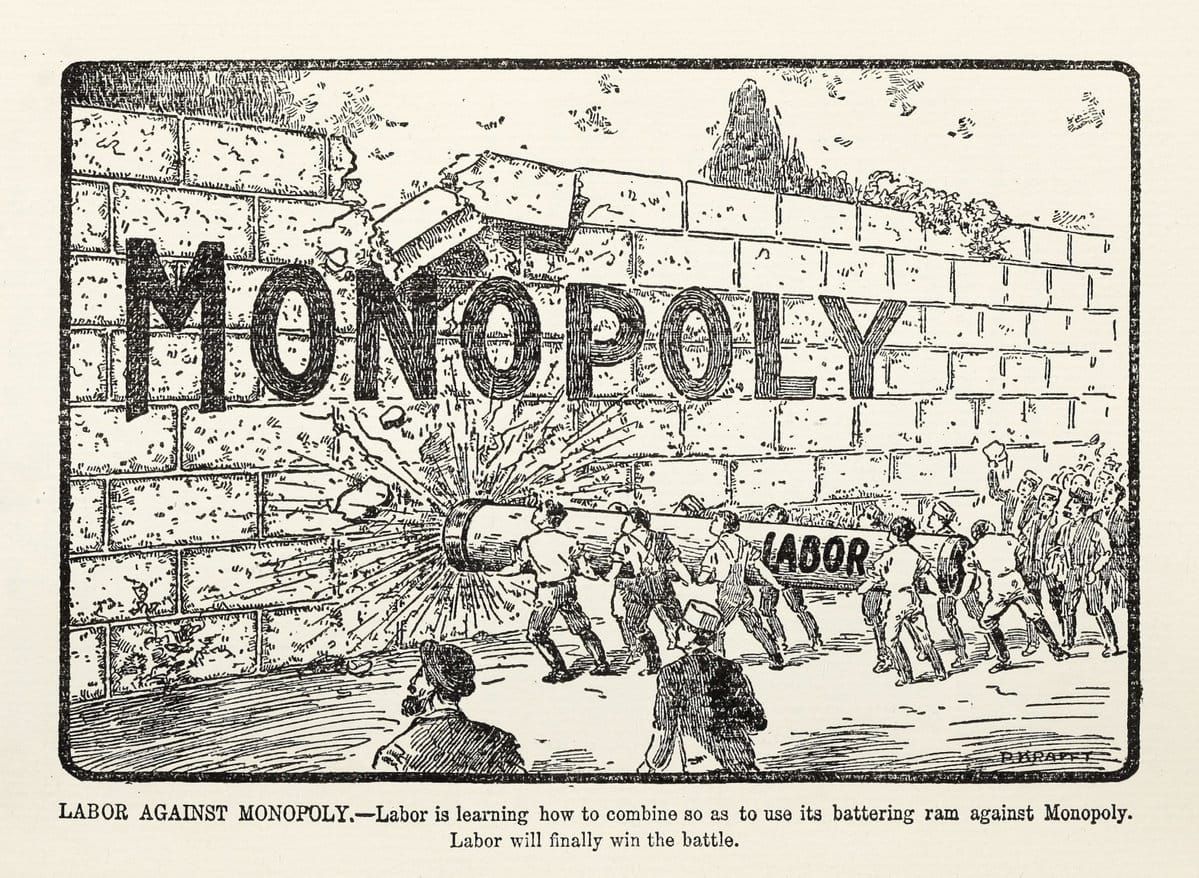
A General Inquiry is a newsletter I started publishing recently, and it focuses primarily on the history of the general strike and the American labor movement writ large. Like any good socialist I believe the best way at understanding American history is viewing it as a continuum of class struggle. After the live-streamed executions of Renee Good and Alex Pretti by ICE agents in Minnesota, the calls for a general strike began to mount as a mechanism to shut down business as usual and force the hand of the ruling class to heed the demands that were coming out of Minneapolis and other cities across the country organizing against the deportation regime: ICE out of our cities, cut public contracts that fund ICE, abolish the agency outright.
On a human level I was and remain deeply inspired by the bravery of this collective resistance, of people taking to the streets en masse to defend their neighbors. And as a lover of history I was thrilled to see so many people express themselves politically as workers instead of consumers, recognizing that the withholding of their labor was the most powerful weapon they had. That doesn't really happen in this country anymore, especially since a massive strike wave in the 1930s and 40s led to the passage of Taft Hartley, which effectively made general strikes illegal. Compared to places like France, Italy, Greece et al, where workers shut down the ports and their transit systems and bring their countries to a standstill as soon as a politician even, like, fantasizes about delaying their pensions by a month or something.
 Substack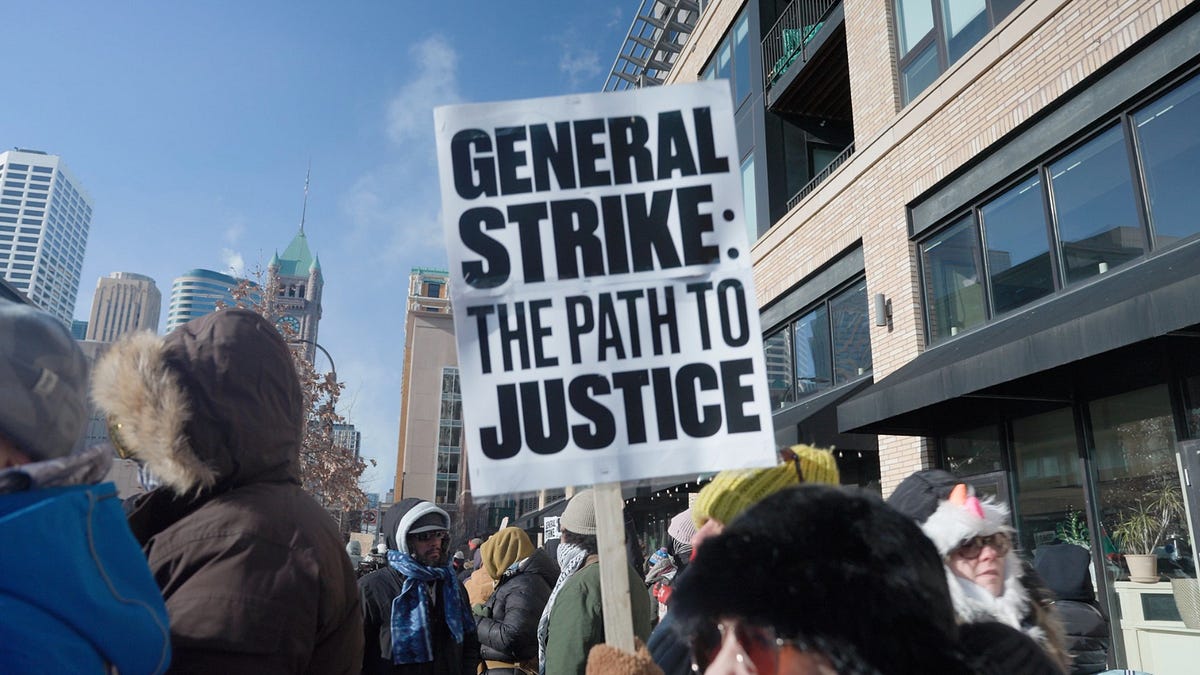
What really pushed me to start writing the newsletter was the metadiscourse that followed the demands to "expand the strike": I witnessed some very pedantic and demobilizing arguments unfold about what actually constitutes a general strike, about how the people who thought they were striking were merely participating in liberal protest. Now, there might be some truth to this, and I do think the definitions of things are important, but just the way it was playing out on Twitter (please don't make me call it X) was very unhelpful.
So I wanted to use the newsletter to have long conversations with labor historians, journalists and organizers about the past, present and, hopefully, future of general strikes in America and how we can actually get there. Sorry, I know this is a comedy newsletter; I will try to be funny in your next question.
If I recall correctly, we met about seven years ago when I briefly lived in LA and you were producing comedy shows there. I'm curious how producing indie comedy, which is most comedy, shaped how you think about labor and politics. (For instance, I know it was important to you to pay comedians on your shows, which isn't true of everyone in your position.) What did you like about it and what didn't you like? What did you learn?
Yes, the first monthly I ran in Los Angeles was a variety show called "Everything's Great!" and it was hosted by Demi Adejuyigbe, Addie Weyrich, and Nick Kocher at the Dynasty Typewriter theater. That started in May of 2019. I wound up there a bit circuitously. I was a freelance contributor to Splitsider before it got gobbled up by Vulture, so then I was a freelance writer for Vulture and New York. My primary focus was comedy interviews with the occasional longer piece covering broader trends or social patterns in the comedy scene. One of my favorite pieces was interviewing a bunch of comics—Patton Oswalt, Weird Al, Anna Drezen, to name a few—about a joke from their past that they regret or were fine acknowledging had aged poorly. This was Peak Woke, an era I miss. We didn't know how good we had it.
Anyways, I got in a little trouble for Being Too Mean To My Political Enemies Online, and I guess Vulture thought that was bad for business. So I was no longer a freelance writer for them. I desperately wanted to fill that creative void that writing used to provide outside of my day job, so I opened up the ol' rolodex of comedian contacts I had made during my tenure as a comedy journalist. I had met Demi Adjuyigbe the year before at a Thanksgiving dinner party, and I cold messaged him saying something like, "Hey man, you're one of the funniest people on the planet, I have never produced a show before, but I think we should do a monthly, whattaya say?" Luckily for me he was already talking to his buddies Nick Kocher and Addie Weyrich, who I hadn't met yet at that time, about doing a show, and that they needed a producer. So the timing worked out perfectly.
"The entire scene was just propped by unpaid labor. I genuinely felt insane discovering just how widely accepted such exploitation was."
To the second part of your question, about how my approach to producing was shaped by my politics, I would say it was a very clear and easy decision: if you do our show, you will get paid. Not to butter your bread, but your gumshoe reporting at that time—particularly on UCB's prolific labor abuses and exploitation of its performers—really exposed me to just how endemic the perverse "earn your stripes by performing for free" mentality was in comedy. Like I knew it, but I didn't really know. Ya know? The entire scene was just propped by unpaid labor. I genuinely felt insane discovering just how widely accepted such exploitation was.
Also reading Michael Jeffries' Behind The Laughs: Community and Inequality in Comedy further radicalized me as well, helping me understand the comedy scene as both a social milieu and a workplace, and how an emphasis on the former makes it easier for certain actors in the chain of command to economically take advantage of the latter. So one of the defining ethos of "Everything's Great!", alongside making sure our lineups were as diverse as possible, was that if you do our show, you will leave with cash in your hand.
As a regular person with a regular day job, I was paying our guests out of my pocket while the three hosts split the door, which itself was a split with the theater after certain ticket sale thresholds were cleared. I was grateful to be in a position where I could afford to do that, but that calculus is quite unsustainable as a standardized practice across the indie comedy scene. Like, it shouldn't be incumbent on a part-time producer or the hosts of an open mic to have to shell out money from their own pocket while the venue reaps the benefits of the increased foot traffic and food-and-beverage profits. Surely a more equitable arrangement is possible if a working guy who is also pretty dumb can figure it out how to make it work.
What I liked most about it? Being able to meet and watch some of my favorite comics at the time, who really widened the aperture of how I viewed the form, viewed art, viewed the world. People like Sarah Squirm, Chris Fleming, Carl Tart, Christina Catherine Martinez.
"It shouldn't be incumbent on a part-time producer or the hosts of an open mic to have to shell out money from their own pocket while the venue reaps the benefits of the increased foot traffic and food-and-beverage profits."
What I disliked about it? Knowing that I was in such close proximity to so many predators, both of the financial variety (á la your classic sociopathic venue owner) and of the racial and sexual variety (76% of the Netflix is a Joke lineup in 2026), because far too many comics than we should be comfortable with are cowards who will look the other way when it comes to the workplace safety of their colleagues if it means they might get booked on a bigger show or podcast down the road. Oh yeah, that was the other important line in the sand Demi, Addie, Nick and I democratically drew: absolutely no predators, or friends of predators, on our show.
Demi, Nick, and Addie are extremely funny people. What was it like working with them?
Genuine angels and comedic geniuses. I frequently was in awe by the volume and speed with which they could create. Every month's show I would say "well that was the funniest goddamn thing I've ever seen" and then they'd top it the next month. And they complimented each other so well—Nick was the traditional standup with an acerbic, Mulaney-esque observational style, Demi composed elaborate musical comedy set pieces, and Addie brought this whirling dervish energy with character work, clowning, and martial arts.
The show was genuinely thrilling. They loved collaboration, and were very open and curious and receptive to each other's ideas for the show, for ideas about guests, for their group bits, my favorite of which was when they brought me out on stage, sat me on a stool, and pulled up a slideshow of all the tweets I sent from the show account—whose avatar contained all three of their faces—talking shit to LA's mayor and other politicians because I'm an insane person.
It was just a special show that I hope we can revisit when the gang's schedules align. Because they're all killing it: Nick just co-directed his very funny debut feature Pizza Movie for Hulu; Addie is preparing to perform at Warped Tour this year; Demi just put out an incredible special on Dropout. I'm just proud of my pals. Maybe they'll finally return my texts now that I've said all this nice crap.
In your view, how has the comedy scene changed over the last seven years? Or really we could talk about Hollywood more broadly. How have things improved for creative workers, if they've improved, and how have they gotten worse?
Honestly I feel a little less confident speaking on the State of Comedy™ these days because I have been at such a remove, mostly just producing one-offs here and there that are typically fundraisers for organizations like Palestine Legal or local DIY venues that I admire that could use a little cash infusion. But the LA scene does seem to be experiencing a renaissance. There are tons of truly great shows popping up that are ran by comics: Jonah Ray's weekly "The Scratch Pad" at Scribble in Highland Park, Carmen Christopher's show at Zebulon in Frogtown, Transit Girls with Nori Reed and Hayden Johnson, "Good Heroin" at Stories in Echo Park is always cooking.
It kind of feels like it did in 2018 again, where every night there were multiple shows to choose from no matter which neighborhood you were in. At the risk of sounding corny, it does feel like an immersive comedy community again, instead of this balkanized, siloed off thing. Oh, one big change, here in LA, at least, is the clown takeover. Sending nothing but love to the clown community, but I'm very scared of you.
But as far as working conditions for creative workers overall? Here I can confidently say: it's in the pits, brother. The confluence of Covid, the fires, two major strikes, and capital flight has led to a level of unprecedented contraction that I feel presents an existential crisis for the industry. Production has left LA, wages are being suppressed, and things are only going to get worse for workers and any hopes of upward mobility in the creative industries should this Paramount-Warner Bros merger get approved. The greediest, most incurious freaks have hollowed out an industry that was once an almost guaranteed path to middle class comfort. It's no-joke one of the most depressing and frightening developments of our lifetime. But maybe that's what explains this exciting resurgence of local indie comedy here. The jesters are dancing on the ashes of the old world and creating something new.
This interview does not officially fall under the umbrella of my new “What Makes Me Laugh” series, but I’m going to ask you about what makes you laugh anyways. To start: tell me about your favorite living comedian and your favorite dead comedian.
Favorite living comedian? Kate Berlant. Collapses comedy's past and present, high and low, the distant and intimate, into one wholly original voice and point of view. The way she deconstructs performance... no one makes me laugh harder. What she does in John Early's Maddie's Secret will take your breath away.
Favorite dead comedian? If I'm allowed a tie: it's probably Lucille Ball and Richard Pryor. The former turned physical comedy into ballet, into opera. The latter was a raw nerve and an empathy-generating machine. Richard could take something so achingly personal, like his struggles with addiction, and through casual conversation completely rewire your own understanding of it by inviting you in. I think so many comics today think that “speaking truth to power” or “making light out of serious subjects” means saying the most shocking thing imaginable, while keeping the audience at some sort of remove or ironic distance. I can’t think of anything more boring. I admire people who use humor as a magnifying glass for our own shared struggles or contradictions. Richard could also take something abstract and completely made up, like, and forgive me for using this as an example, "The Great Pussy Drought of the 1950s" bit that he opens Live From The Sunset Strip with, and convince you it has real-world implications and weight.
Can you tell me about something, whatever it is, in the recent or distant past, that made you lose it laughing?
Rob Schneider bombing at CPAC. Generational. Transcendent.
Is there any work of comedy that you feel changed your life? Tell me about it.
As a young kid it was In Living Color. I wouldn't say I grew up in a "comedy household" but comedy was definitely present, just a bit ambient. My dad loved John Belushi, The Three Stooges, Animal House. So I was aware of, or at least absorbing, a certain sensibility. In Living Color blew that understanding up into a million pieces. My first time seeing The Head Detective and Homey D. Clown was like learning a new language. It was also the first thing that I came into on my own, so I felt some ownership of it. Like, this is something my parents would never understand or approve of, which is very seductive for an idiot boy. Then in my early teenage years there was another paradigmatic shift with the sophisticated stupidity of Wet Hot American Summer, and then Arrested Development which is the perfect marriage of perfect comedic performances and staggering joke-density. I'm glad they ended it after three seasons.
 Substack
Are there any books, movies, TV shows, graphic novels etc. that may not explicitly be comedic but have still shaped your sense of humor? Tell me about them too.
How To With John Wilson was one of those special, later-in-my-life works that had a rewiring effect. Maybe because it arrived on air during year one of Covid quarantine that it’s impact on my sensibility was more acute, but man, what a time to engage with a project that dealt so delicately with alienation and the passage of time and the absurdity of the human condition. While not expressly a comedy there were at least 3-5 major laughs per episode, because being alive and moving through this increasingly indecipherable world with a billion other people is inherently, cosmically ridiculous. Hearing John deadpan "Oh, okay" from behind the camera in response to someone saying the most insane sentence ever constructed in the English language never failed to crack me up.
Are there any lines of comedy that wormed their way into your permanent lexicon? Simpsons jokes, dialogue from your favorite comics, tweets, whatever it may be…
God. So many to choose from. I find myself often regurgitating Harris Wittels “Foam Corner” quotes from Comedy Bang! Bang!, mostly to myself. “Where there’s a will there’s a Wayans”. Even his tweets, like "Bill Maher the Science Gaher". I miss that guy. I will also borrow from George Costanza from "The Race" episode when Elaine is dating a guy who looks like Trotsky: "Maybe he's very well...red." Tracy Jordan saying "My genius has come alive, like toys when your back is turned." And like any leftist who's too online, Dril tweets flow out without me even noticing. pretty sure just the other week when I was arguing with my dad about politics I said, "The wise man bowed his head solemnly and spoke: 'theres actually zero difference between good & bad things. you imbecile. you fucking moron.'' Went over surprisingly well.