How Much Money Do Comedians Make?
Explore how much money your favorite comedians make from their live shows.

In October 2023, Jerry Seinfeld performed two shows at the Indiana University Auditorium, earning a payout of $618,106 for his promoter, JS Touring.
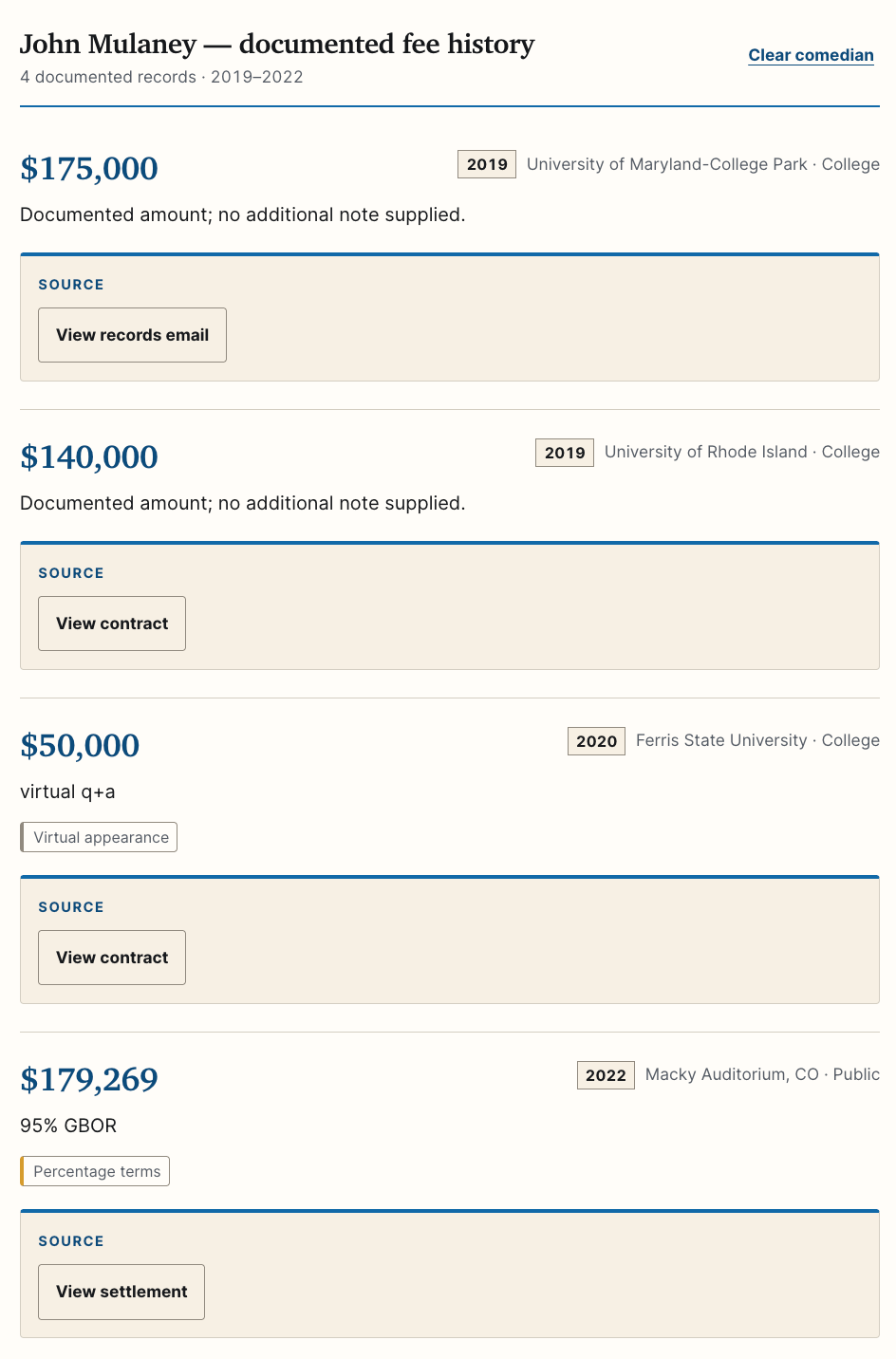
In October 2019, John Mulaney performed at the University of Rhode Island’s annual Family Weekend, earning a fee of $140,000. A few days later he headlined the homecoming comedy show at the University of Maryland, which paid him a tidy $175,000.
In 2018, SNL star Kenan Thompson received a fee of $42,000 for a show at Truman State University. His opener, one-season cast member Luke Null, received $2,000. When Adam Devine headlined the University of Central Florida’s “Comedy Knight” in 2017, the university paid him $51,500 for a 60-minute set—and his opener, Adam Ray, $500 for a half-hour set.
These are just a handful of the datapoints you’ll find in the Comedy Fee Tracker, a new, searchable comedy payment database for Humorism subscribers. Explore a few records below, then keep reading to learn why I’m making them available, where they come from, and what they actually describe.
Introducing the Comedy Fee Tracker
Live comedy is an almost billion-dollar industry. According to Pollstar, the 100 top-selling headliners generated $696 million in worldwide gross revenue in 2025, with “events featuring comedy headliners” generating $837 million. A-listers like Shane Gillis, Kevin Hart, Tom Segura, and Leanne Morgan saw anywhere from $11 million to $32 million in gross ticket sales. The top earner, Nate Bargatze, sold 962,000 tickets, earning more than $77 million in gross revenue.
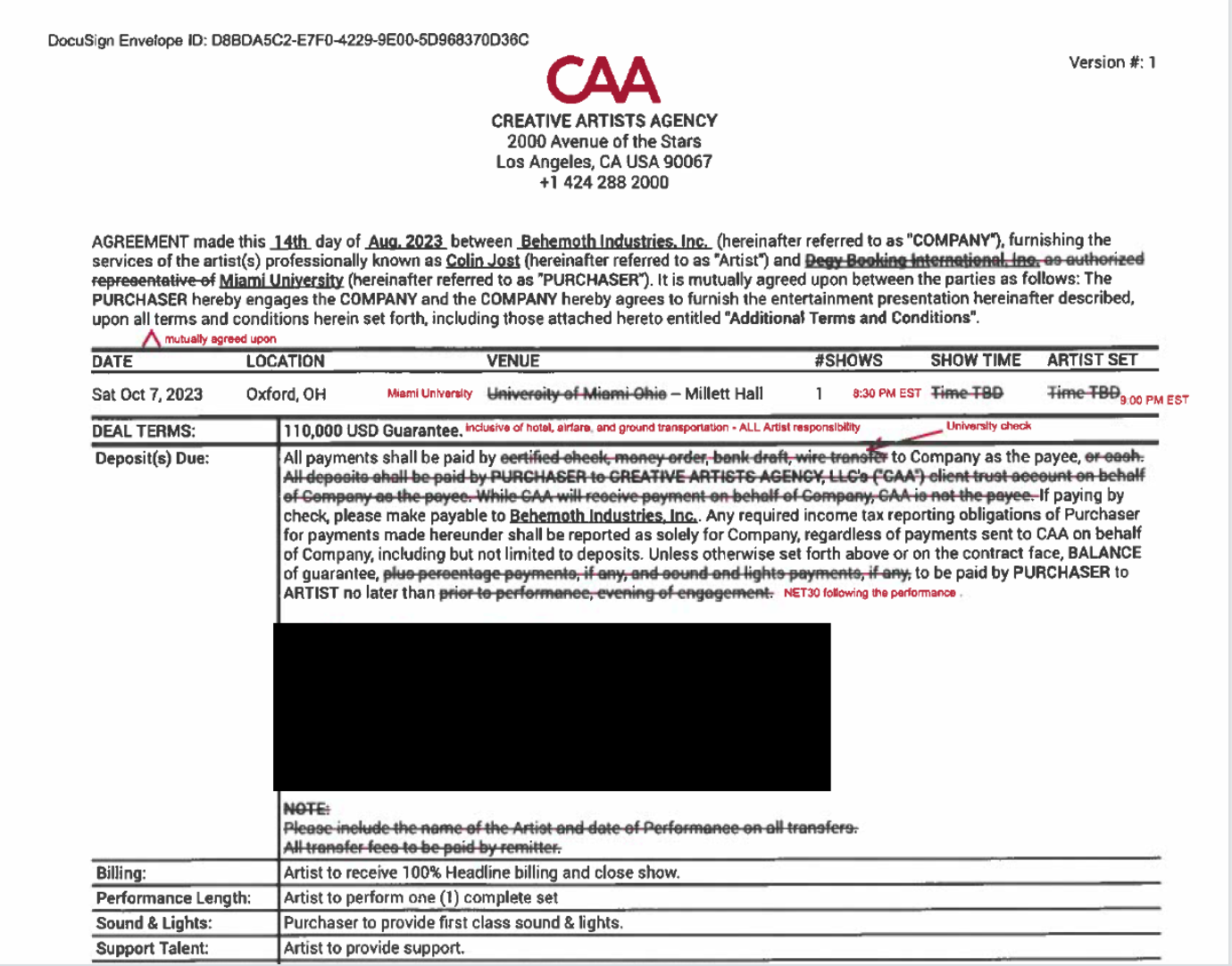
Pollstar’s figures are jaw-dropping, but they also undersell the size of the comedy market by omitting the large subset of comedy shows that don’t sell tickets. All across the US, colleges and universities host A-list comedians and pay for their talents out of institutional coffers. These fees are nothing to sneeze at. In 2021, the University of Illinois at Urbana-Champaign paid Colin Jost $70,000 for an hour of comedy. In 2023, Miami University in Ohio paid him $110,000.
The Comedian as CEO
There are a few things we can extrapolate from these impressive figures. One is that today’s class of touring comedians are effectively multimillionaire CEOs. Their work is responsible for hundreds or thousands of jobs around the world: technicians, stagehands, runners, security guards, and other crew members paid directly out of ticket revenue.
Many of them, of course, are much more than just touring comedians. They run podcasts or even podcast networks, employing producers and editors and other personnel. They make movies and TV shows, with the considerable staffs it takes to mount a Hollywood production. Some have non-comedic business ventures: Tom Segura recently opened a bakery in Austin, and Nate Bargatze is developing a massive theme park outside Nashville. When Joe Rogan and Dave Chappelle received hundred-million paychecks from Spotify and Netflix, respectively, they went and opened their own comedy clubs.
No comedian is an island. If nothing else, they tour with support acts; then there are the managers, agents, accountants, and publicists who all take a cut of their earnings.
The Antitrust Problem
Live comedy’s popularity—and profitability—also hints at the power of live comedy promoters, the companies that organize, finance, and market major comedy tours. These organizations also get a share of tickets, and they exercise significant power over both of the parties they do business with: the comedians who need them to mount national or worldwide tours, and the venues who depend on them to build a season and sell tickets.
Consider one example of this power. In 2021, during the height of the pandemic, I reported on Andrew Schulz’s weekend of shows at the Orpheum Theatre in Los Angeles. Normally, the venue required patrons to provide proof of vaccination, but it waived that requirement for Schulz's fans. When I asked the owner why, he told me he did so at the request of Schulz and his promoter, Live Nation. After I emailed Live Nation for its own side of the story, the owner called me back to clarify that actually nobody told him to change anything, and in fact there hadn’t even a vaccine policy in effect at all. It was not exactly the most credible denial.
 Seth Simons
A few years later, in 2024, Schulz was set to record a new special at the Brooklyn Academy of Music. Then he hosted Donald Trump on his podcast, and BAM backed out. In an episode of Flagrant discussing the cancellation, he shared the theater’s email to Live Nation, which stressed its interest in working together on future shows. “They're canceling my shows, but they're also begging Live Nation to not cancel future shows with them," he speculated, adding elsewhere: "Fuck them and fuck them forever."
As you can see, tour promoters are quite powerful, and that power includes the ability to coerce or punish venues whose principles conflict with their clients’. It helps that many of the major companies—Live Nation, Outback Presents, Nederlander, AEG Presents—are not only tour promoters but also venue owners and operators. Vertical integration puts them on both sides of the transaction, allowing them to steer artists towards venues they own or manage. In the case of Live Nation, which owns or manages most US amphitheaters and the ticketing platform Ticketmaster, a federal jury recently found that this level of power constituted an illegal monopoly. Among other things, the verdict held that Live Nation unlawfully tied its artist promotion services to the use of its own venues. As of this writing, Live Nation is seeking to reverse the decision.
The Public Interest
It matters that comedy is a big business, because money is power. When a comedian earns a six-figure paycheck from a show in Dallas or Denver, a share of power flows through that paycheck to the comedian and their business partners. When I set out to track how much money comedians make, what I was really after is how much power they have, who they’re sharing it with, and how they’re using it. In a world where comedians hold rising influence over social and political life, I consider this a matter of public interest.
 Seth Simons
I do not use the word public lightly. As I explained earlier, many of the venues comedians frequent on their national or worldwide tours are publicly owned. In some cases that means a theater owned by a city, county, or state, and either leased to a third-party management company or directly operated by whatever government agency owns it. Or it could mean a theater owned by a public college or university, which either contracts with a third-party operator or handles operations itself. In both cases, the comedian’s paycheck depends in some capacity on the use of public resources. In the latter, the comedian is usually getting paid directly by the institution, which is to say: the taxpayer.
Transparency and Accountability
For these reasons, I believe it benefits the public to understand how famous comedians and their powerful business partners are using our shared cultural amenities. What are the financial and legal terms in their contracts? How much money does the comedian earn, and how much does the venue keep? Are huge tour promoters exercising undue influence over small, publicly owned venues? Are public funds supporting the return of potential public safety threats, like confessed sexual predator Louis CK? By peeking behind the curtain, where the law allows, we can find the answers to these questions, or at least glimpse them.
Perhaps more germane to comedy workers is the insight these records provide into their peers' earnings. Comedy is a highly inequitable business that’s not exactly known for its wage transparency. Even a limited subset of payment records reveals interesting disparities, like the Kenan Thompson/Luke Null contracts mentioned above. The more information we gather, the clearer this picture will become, allowing us to see precisely where inequalities lie—and then get to work fixing them.
Where Do These Numbers Come From?
The Comedy Fee Tracker assembles official contracts and payment data obtained in records requests to publicly owned venues. Broadly speaking, there are two types of venues included:
- Public colleges and universities. These institutions frequently bring in comedians for homecoming shows and other events. Usually, students get free or cheap admission, and comedians are given flat payments (or “guarantees”) rather than earning a cut of ticket sales. Sometimes they get both—X amount guaranteed, plus Y percent of any tickets sold over that amount. These shows comprise the majority of the data points in the Tracker because I’ve been collecting them the longest, and, frankly, because they are the easiest to obtain.
- City, county, and state-owned theaters and arenas. There are more of these than you’d think. Often they’re managed by nonprofits or private entities—like Live Nation, ASM Global, and other big theater operators—that lease the building from the government. Whether those operators are subject to public records requests depends on the jurisdiction, though I suspect some may be misleading me when they say they’re not. Generally speaking, when you see a comedian at these venues, their promoter has rented the space and fronted various expenses, which they eventually recover from ticket sales. This varies from venue to venue and artist to artist.
There is some amount of overlap between these categories. Many public universities own (and sometimes operate) major regional theaters or arenas where comedians stop on their tours. The Seinfeld gigs mentioned at the top of this page, for instance, were at Indiana University, but they were structured as normal shows where he made money from ticket revenue.
Okay, those are the two main types of venues described in the Fee Tracker. As for the specific records included, there are also two main types:
Contracts. Generally speaking, a comedian’s contract for a flat-rate show at a university states the fee up top. Their contract for a percent-of-receipts show will usually state the terms, e.g. ”85% GBOR,” or gross box office receipts. I say "usually" because some venues, at least based on the records I've received, rely on usage agreements that spell out how much it costs to lease the space and what costs the promoter will bear, but don't say much at all about talent fees. Then there are usually pages and pages of legal boilerplate, followed by specific riders for the venue and artist.
In most cases, I’ve generally omitted the legal boilerplate from documents I uploaded, for the simple reason that I’m a one-man-shop and it’s onerous to go through each one and make sure the source institution’s lawyers redacted everything they need to redact. (Sometimes they don’t!) Where possible I’ve included the artist’s hospitality riders, where they lay out their dressing room and technical requirements for each show.
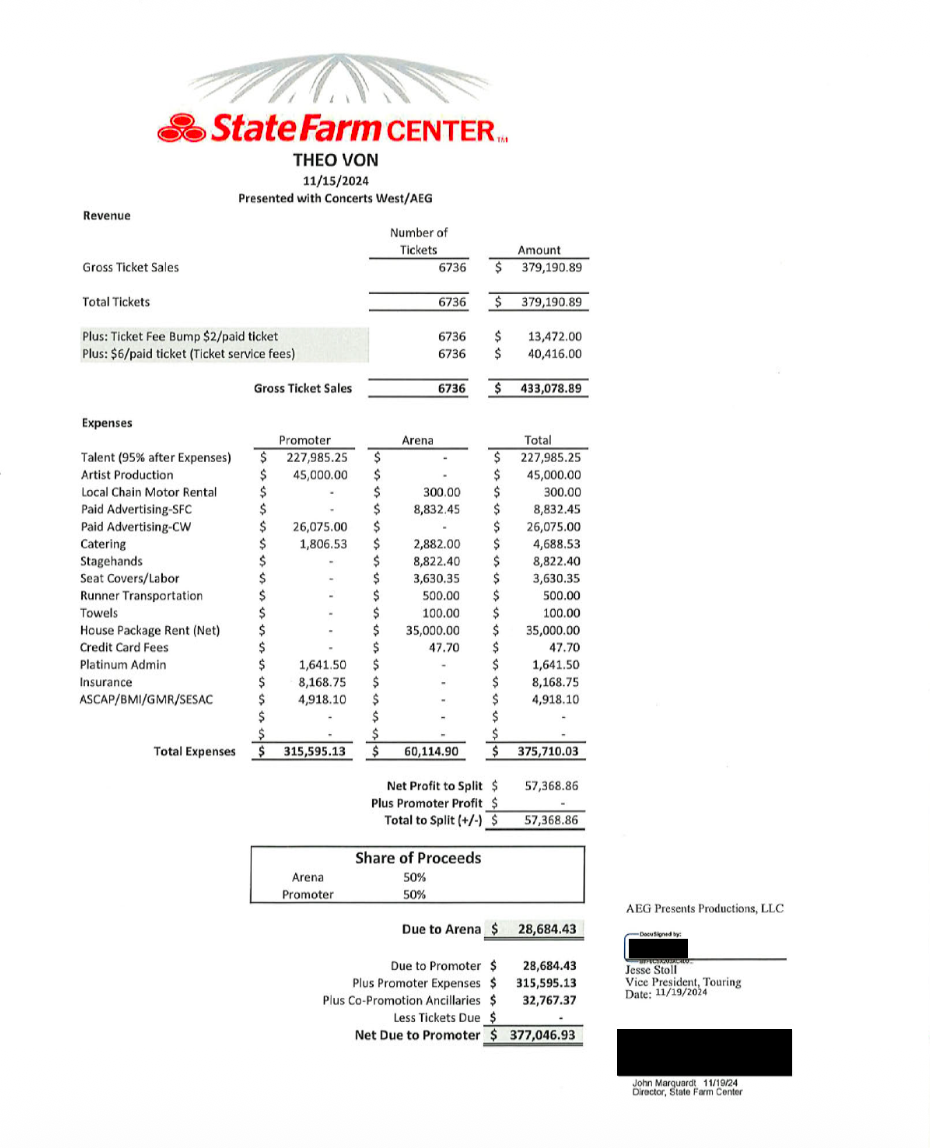
Event settlements. After a show, a venue will tabulate all the expenses deducted from gross ticket sales and list the number to be paid out to the promoter. Occasionally a settlement might list separate payments to the comedian and promoter, but the standard model is that the venue pays the promoter, who handles the comedian's fee from there. Whatever terms they might have—a guarantee, a percentage of net revenue, or in some cases the greater of the two—are beyond the scope of public records requests. That said, you do occasionally see a phrase like "Talent (95% after expenses)" in the cost breakdown, as in the below settlement for a profitable 2024 Theo Von performance. (This fee is not currently in the Tracker, because I just received it literally days before launching the tool.) Sometimes these settlements are all I request or end up getting from a source institution, because many charge for attorney and administrative labor, which can get pricey.
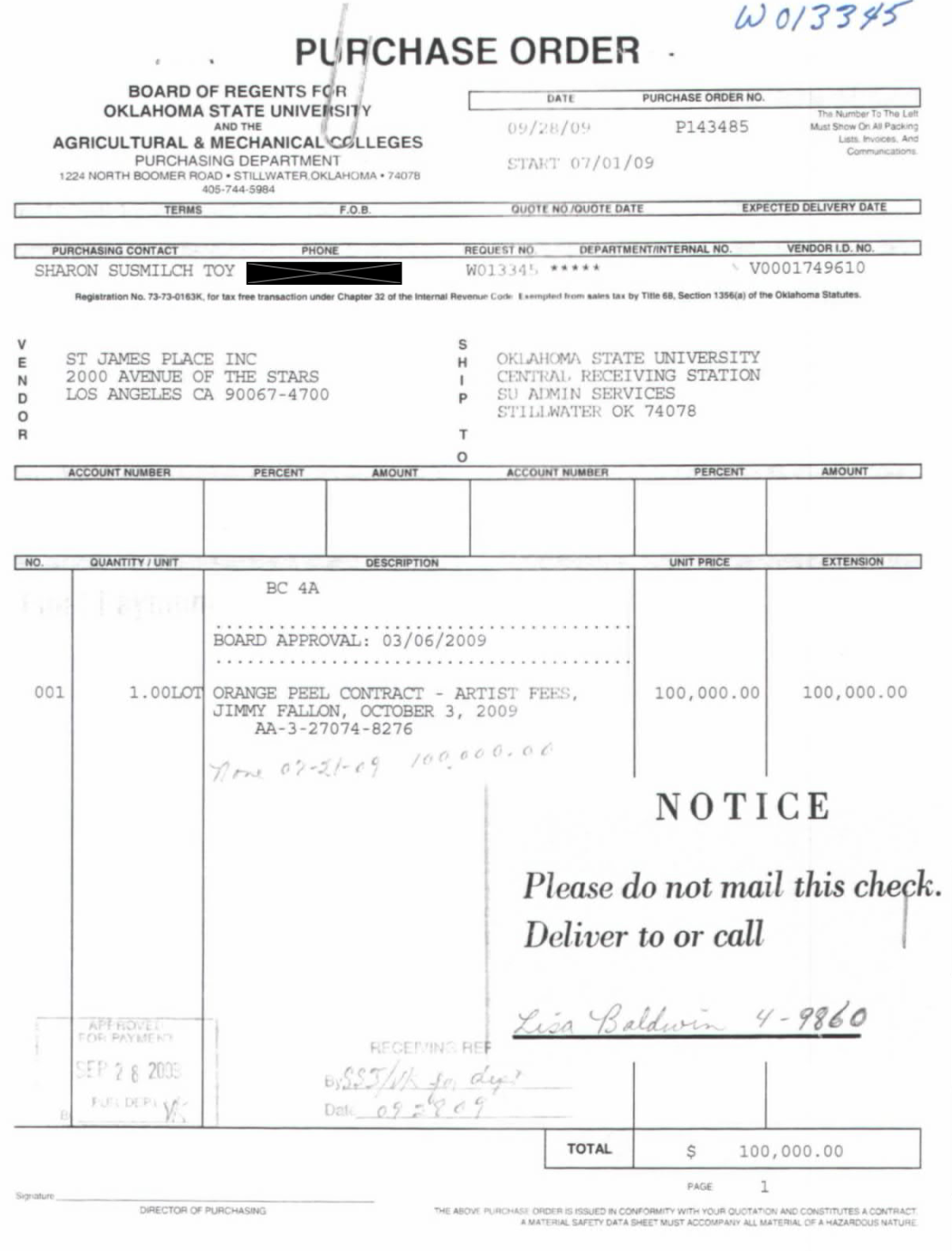
There are occasional exceptions: sometimes an organization will send me a purchase order, a wire transfer form, or an invoice instead of a settlement. A few entries are sourced not from records requests but from online procurement bulletins—currently the ones maintained by Illinois and New York—which track payouts made by state agencies. There are also cases where the records officer told me directly in an email how much they paid X comedian for Y show in Z year. As of right now, that only applies to select entries from Florida State University, the University of Maryland, and the University of Connecticut, all noted in the Tracker.
What’s in the Comedy Fee Tracker?
Search for a comedian, then click on their name to view their documented fee history. Every entry in the Tracker shows their net payment from a given show. That means either the flat fee the comedian received, per their contract, or the total payout to the artist's side—comedian and promoter—after expenses were deducted from gross receipts. This is where it differs from services like Pollstar, which reports data voluntarily submitted by promoters, festival organizers, and other industry professionals.
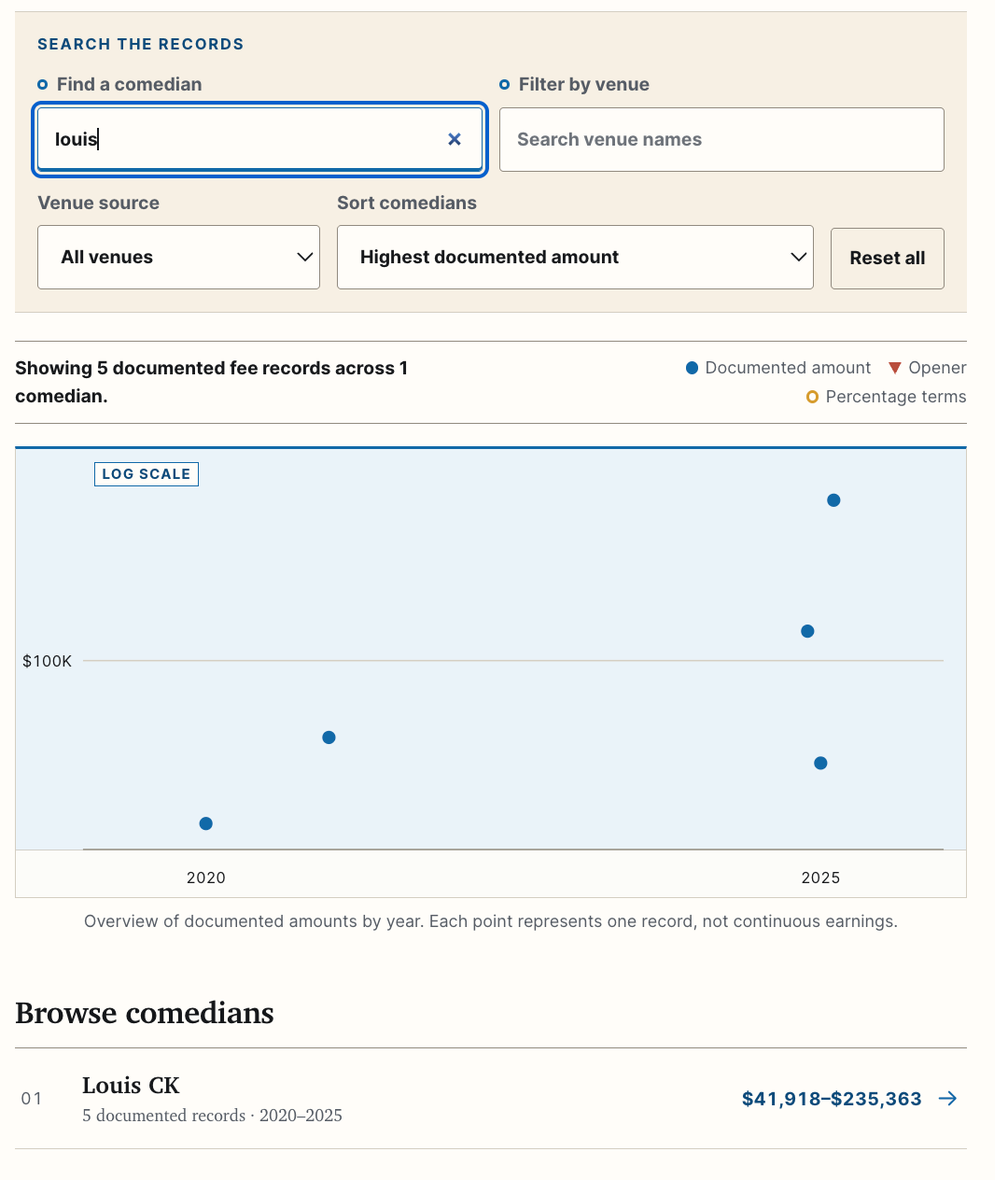
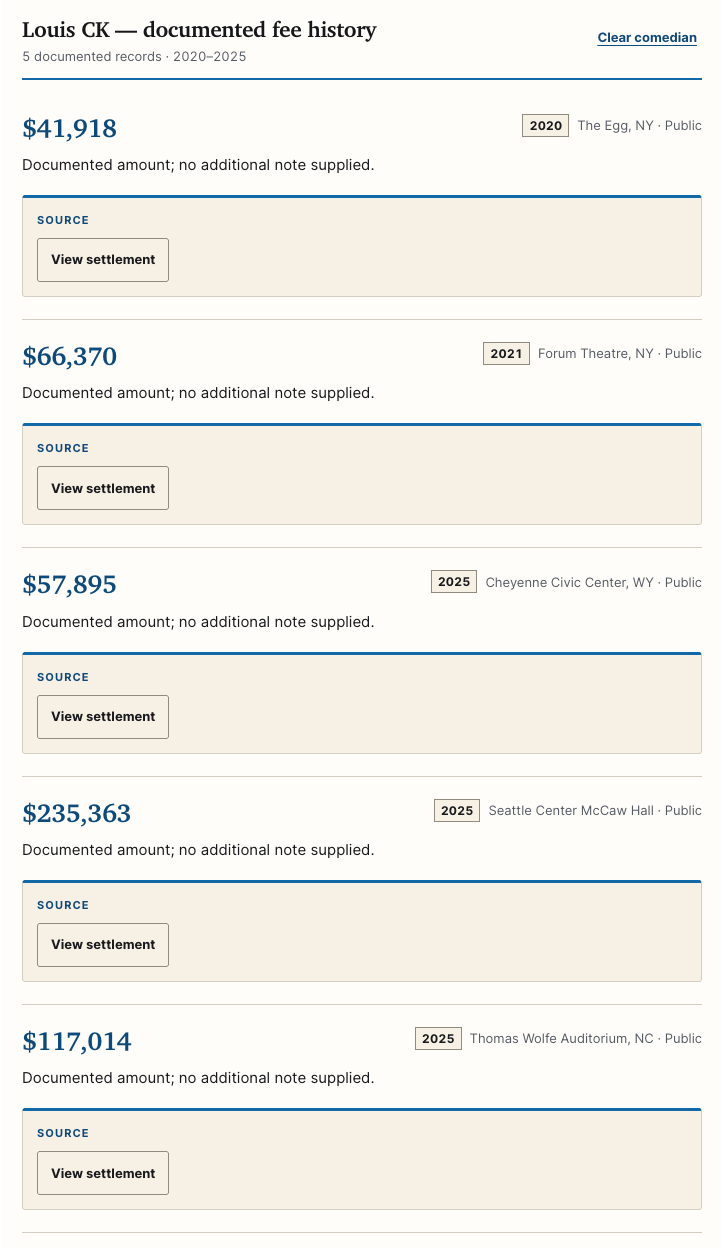
In addition to fee information, each entry includes the year of the show, the venue, and the type of venue: university/college theater, or your average publicly owned event space. It notes if the comedian was an opener and if their contract specified a percentage deal. Occasionally it might include other information I think is pertinent. For instance, Amy Schumer’s entry is for a show at FSU that paid $175,000, according to the records officer. Since a contemporaneous article notes that the show was billed as “Amy Schumer and Friends,” I suspect that payment was split several ways, which I’ve noted in the entry.
Finally, nearly every entry includes a link to the source material: official contracts, event settlements, invoices, wire transfer records, etc. The Tracker notes rare cases where the information was provided directly by a records officer rather than the record itself.
Oh, also: I’ve included records for two Bob Dylan performances, just as an interesting point of comparison.
What’s Not in the Comedy Fee Tracker?
I want to be clear that this is an extremely limited subset of data, or really a subset of a subset: records from publicly owned venues that also are subject to FOI laws. Right now it includes 152 records covering 91 comedians. The dataset is also shaped by my own interests as a researcher, which is why there’s more information for people like Louis CK, Chris D’Elia, and Colin Jost than there is for, say, Mike Birbiglia or Taylor Tomlinson.
There are a number of things these records don’t tell us. As I said above, settlement documents generally show payouts not to the comedian, but to the promoter, who fronts most of a show's expenses and takes its own cut of the proceeds. Public records usually don’t tell us how much the comedian walks away with after that, or after they pay their agents, managers, and the tax man. If they have deals with their openers that aren’t enumerated in official contracts, that information is opaque to us too. (This is a good read on event settlements.)
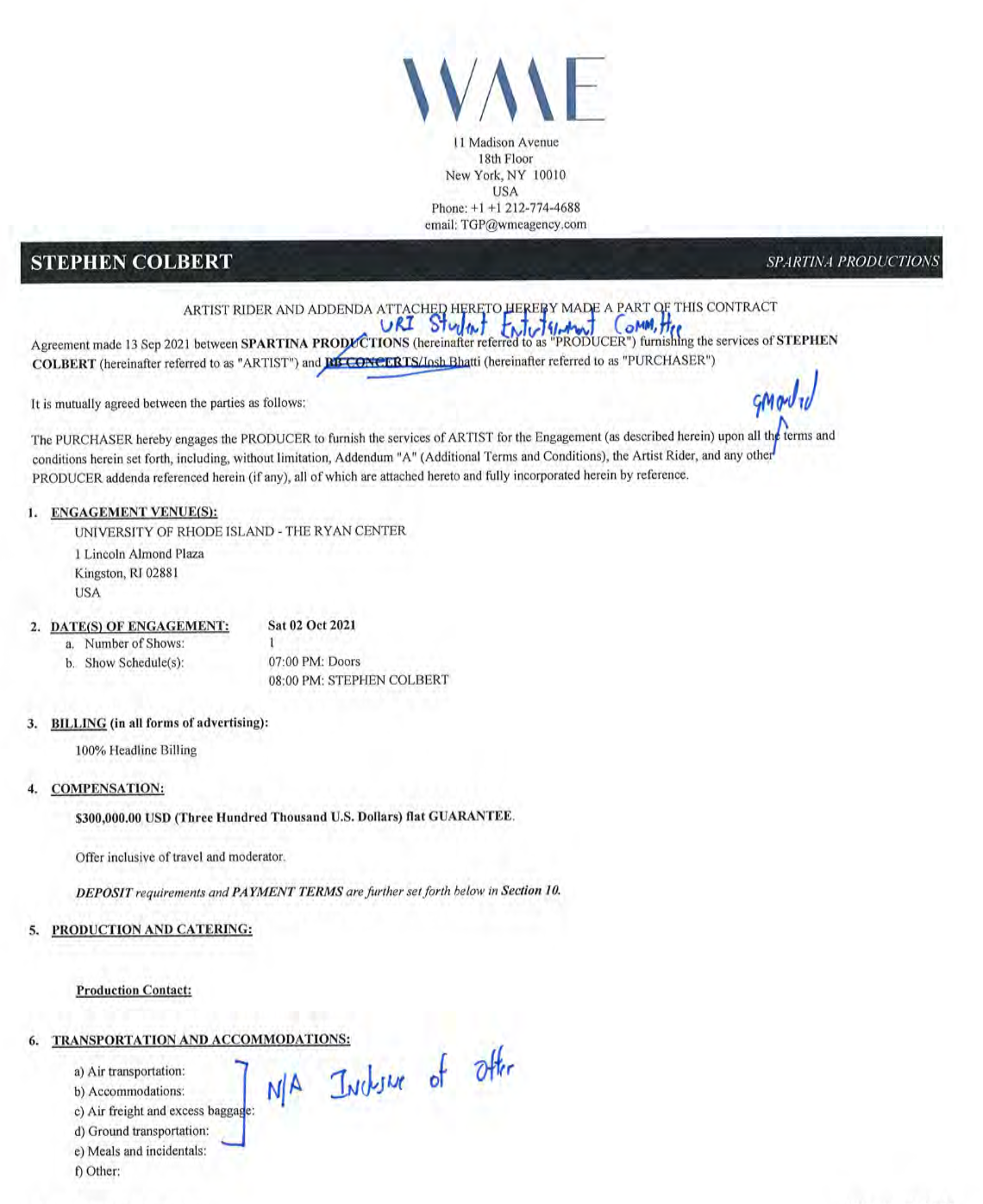
In other words, these records don’t show us a comedian’s net earnings over time. They don’t show us how much comedians make at private universities, which may have more or less money to offer than public ones, or at corporate gigs, which I understand pay quite well. They certainly don’t show us any comedian’s net worth.
Despite these limitations, I believe they do provide an illuminating glimpse of various comedians’ market power, both in and of themselves and relative to other comedians. They also reveal something I’ve pointed out over and over again in the Humorism newsletter: if you are a comedian who can put a few thousand people in a theater in various markets around the country, you effectively have the power to turn on a money spigot whenever you want. Comedy’s upper class is making incredible amounts of money while its middle class languishes. Meanwhile the pipeline to anything resembling a sustainable career has long since crumbled away.
Can I Request a Comedian?
You can and you should. If there’s a comedian you’d like to see included, or if you’d like data on a recent show by a comedian who’s already included, use this request form. I’ll certainly see what I can do with just a name, but it helps if you can pin down a specific show at a publicly owned venue in the US.
How Can I Access the Comedy Fee Tracker?
The Comedy Fee Tracker is currently free to browse, with no sign-in required. Starting Monday, August 3, you will need a free Humorism newsletter subscription to access it. If you like the tool and want to keep up with my reporting and research on the comedy industry, I'd love it if you signed up now.
Costs and Support
Although this tool is free to access, it’s not free to operate. In addition to the development costs (not cheap!), the records requests themselves often come with substantial fees. A few contracts or event settlements can require many hours of research, review, and redaction by the source institutions, running into the hundreds of dollars.
If you value this tool, please help support it. Going forward, I plan to update the Tracker on a regular basis—hopefully quarterly, if the pace of my research allows—and provide direct updates to paying subscribers as records come in.
I’d love it if you became a paid subscriber, but even chipping in a few bucks via the tip jar goes a long way.
Thank you for reading, and happy searching: