A Conversation with Filmmakers Malin von Euler-Hogan and John Purcell
On their new movie Dead or Dying, screening next week in Brooklyn.
What I'm Watching will return next week! Please listen to the Humorism Evening Podcast and get a paid subscription if you can.
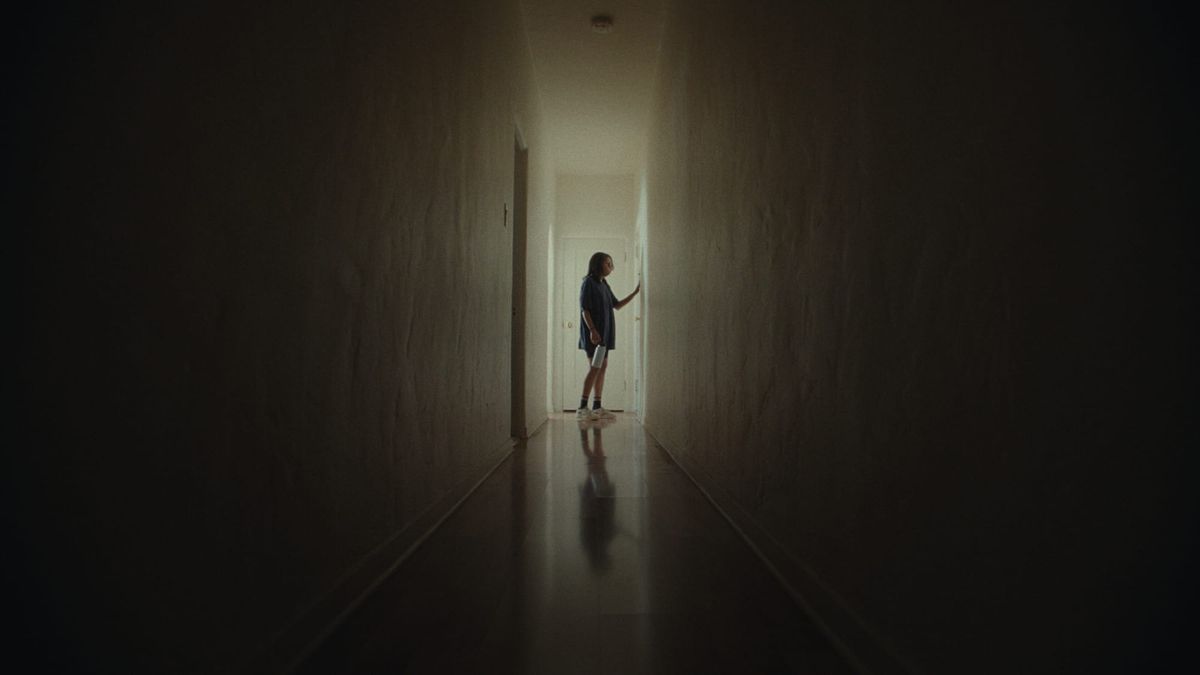
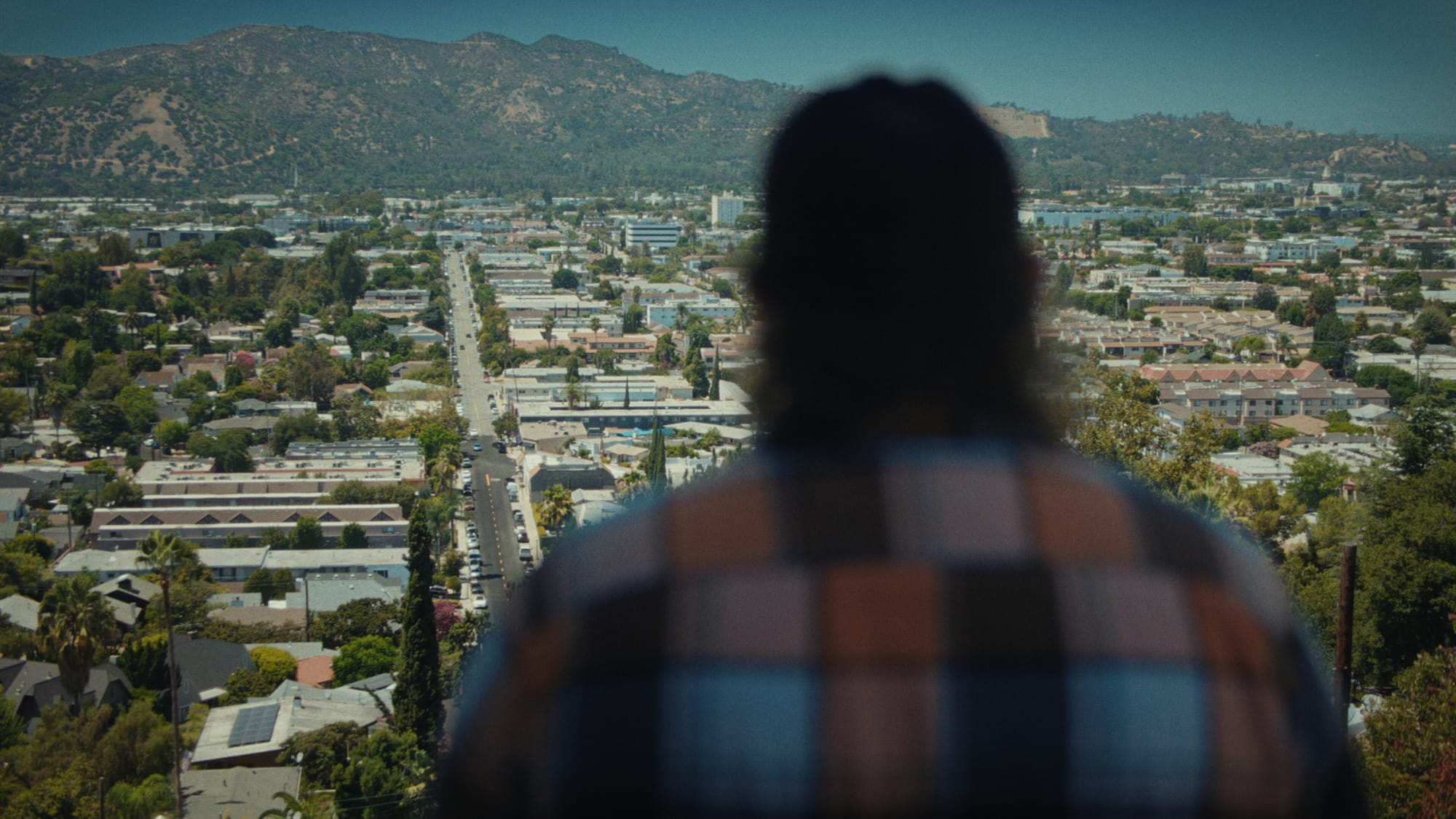
I recently had the pleasure of speaking with Malin von Euler-Hogan and John Purcell, the writers and directors of the new film Dead or Dying. I also had the pleasure of watching Dead or Dying, which will screen next week at Film Noir Cinema in my old neighborhood of Greenpoint, Brooklyn. (Details below.) Set in Los Angeles, the film follows a loosely connected sequence of characters in a slightly different—though perhaps not that different—version of the world, one that has grown to accommodate the ongoing sudden deaths of thousands or possibly millions of people. Sound familiar?
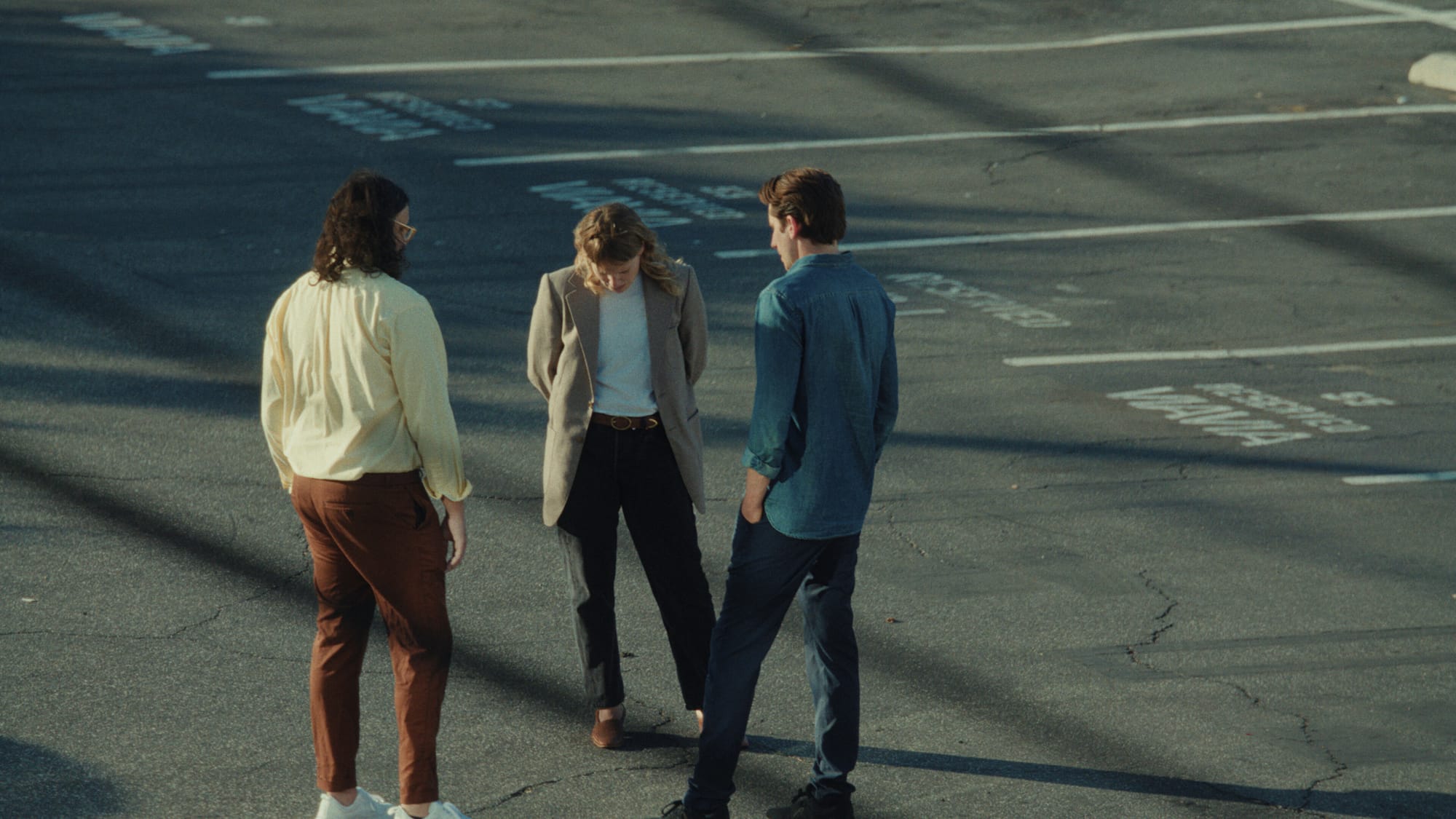
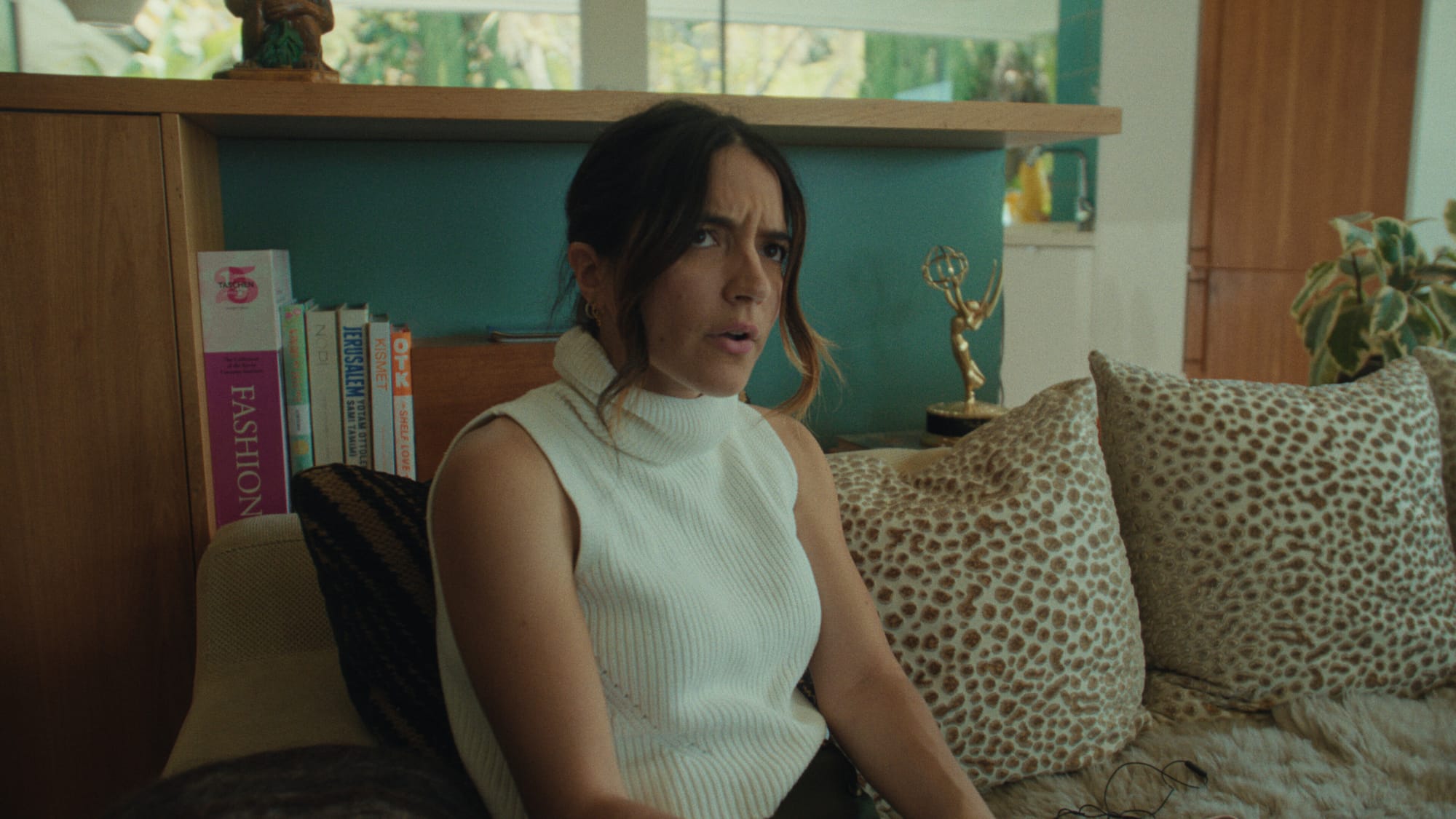
Featuring a cast of improvisers that von Euler-Hogan and Purcell met during their years at UCB, the film envisions a society eager to metabolize constant, horrifying tragedy. Among others, we meet an actress (Alyssa Limperis) too preoccupied with her upcoming photoshoot to care that her cleaner (Juliet Prather) dropped dead; a therapist (Ryan Creamer) who reassures his client (Sydney Battle) that death is just a mindset; and a tech entrepreneur (George Kareman) hilariously traumatized by the expiration of his favorite billionaire. No one knows how to grieve, or if grief is even an acceptable response. Instead they lash out, stew in their own denial, or simply open their arms to the fate they know is coming.
If you’re in NYC, you can see Dead or Dying as part of the Art of Brooklyn Film Festival on June 2nd at Film Noir Cinema: tickets here. Attendees will be able to purchase a USB drive of the film with special features; you can also preorder a USB via Video Store•Age.
For now, please enjoy an in-depth conversation with the filmmakers. We discuss how their improv backgrounds and mutual aid work informed the film; the radicalizing effects of 2020; reflections on their time at UCB; and much more.
Can you tell me how the project came together?
Von Euler-Hogan: John had been making a bunch of shorts over the last few years in LA, and we wrote one together that had come out in 2023. And we were talking about moving to Dublin and were like, "Well, before we go, we should make some shorts with our great comedy and filmmaking community that we have here." And then we were like, "We could do three… or, wait… or we could just do a feature."
We had made this short, which was sort of a proof of concept style-wise for shooting nine pages in a day, and we realized if we just did that times nine we'd have the length of a movie. So that's how we first thought that we could take on a feature. But the idea itself, I guess, was just born of living in the US at this time.
Purcell: I felt like once we started writing, it fell out of us. It was like it had been pent-up, a lot of this stuff. I would date it to everything that started happening with the onset of the pandemic and then all the way through to what was happening in Palestine at the time, and is still happening, obviously. I think some of the absurdity of the contradictions in society were starting to feel really apparent to us.
Tell me more about that absurdity and how you dramatize it.
Von Euler-Hogan: A lot of the situations in the film are much more absurd than the real life things we're drawing on. I never worked for someone that would have truly ignored a death happening on the job. But for context, at the start of the summer of 2020, with Covid and everything happening, we started doing a lot of mutual aid and homeless encampment sweep defense work. And so our lives some days would be waking up at 6:00 AM to go film these horrific violent sweeps of human beings' homes. And then I would have to log on to my Zoom Hollywood job and hear just—what you can imagine. Not that that specifically made it into the film, but I think this sort of whiplash is partly what we were finding funny, or absurd, at the time.
Purcell: And I think also what we were seeing from Palestine, were journalists and everyday people sharing the immediate aftermath of bombings and mass murder. And seeing very graphic detail, really the most viscerally upsetting stuff probably most of us have ever seen, but in the context of a social media feed that is also showing you all these other things—that in itself is a kind of ridiculousness. There's commercials or someone's banal post about something and then you scroll to the next thing and it's a headless child, which is something that I've seen more than once. But bouncing from that to your boss being like, "I need that PDF now." That is what we and probably a lot of people were experiencing. And I think that felt so crazy-making and absurd to us.
Our movie does a lot of analogizing of this stuff, obviously. I guess it's a backdoor way for us to talk about all these things without so specifically and concretely talking about them.
Do you feel that your improv background came into the making of the movie at all?
Purcell: One of the first ideas we had for the movie was to base it on the structure of this improv form called La Ronde. We know all these great actors, and rather than using a traditional structure where we follow one or two characters, this felt like a fun way to use more of our community and bring more people into the process.
And then when it came to actually shooting it, we told the actors, "Look, please know the material, know the content of it, but feel free to then do whatever you want with the material, improvise." And because every actor in the movie is an improviser, they're all very adept at that. It was up to everyone how much they wanted to do it. Some would do a little bit, some would give us something really different every time.
The movie ultimately has a good amount of improv in it, which I'm kind of a bit allergic to when I hear other people say that. I don't know, for me, the Judd Apatow style of improv, what that has meant, often I haven't connected with that kind of style personally. But it didn't feel to me like what was happening was riffing, which is what I would have called that.
Von Euler-Hogan: It was definitely well within the confines of what we had scripted and hoped would come across in the story.
Purcell: And just more exploration of the character, hopefully, in the moments where people did that. I would say improv actually ended up having quite a big role in the film, which is fun because that is how we met and that for both of us was our entry point into doing anything in the entertainment industry.
I love how quiet the deaths are in this film, which makes them all the more shocking. Can you give me any insight into your thought process there? Were they always going to be sudden, gentle deaths?
Von Euler-Hogan: It was never a question of "should this be bloody and violent and gory in any way." That's maybe not our taste, but I do think it also speaks to how invisibilized a lot of death has become, whether it's social murder or any death we prefer not to look at or we have to look away from because our jobs "require it."
The other thing we were talking about is that we don't know what the long term effects for Covid may be. We were just reading stuff about, "Oh, is everyone going to be having a cardiac event in five, seven years' time thanks to repeated infections and if so, what does that look like?". But specifically for the only character that we see actually die on screen, we looked up videos of people experiencing cardiac events.
Purcell: There's been newscasters, sports commentators who've been live on television and had cardiac events or passed out. When you're actually watching the end of someone's life in that way, it's bizarrely anticlimactic. You see their eyes are open, there's light in their eyes—and then they just go, and it doesn't feel like some big thing. It doesn't feel like a big moment. You're there one second, and then you're not.
Von Euler-Hogan: And I think story-wise it's helpful for it to be an ignorable event, right? If people want to not see it, they can not see it. They can just say, "Oh, maybe she's sort of tired and she's just nodded off."
I was struck too by the helpline characters call when they find a dead body, where a recorded voice asks if someone will be there with the body when authorities arrive. It’s not assumed they’ll stay; some characters just straight-up say "no" and go on with their day.
Purcell: We had a strange—I mean, strange is maybe not the right word—but more of a traumatic experience when we were doing mutual aid in LA, when we found someone who had died in their tent. And we got to be there to see how the state—there were police, the fire department, and an ambulance—came and processed this death. And it was inhumane but also just very humdrum. And I think that probably did inform how we think something like that would go if this actually did happen.
Von Euler-Hogan: And how routine it would become if it was happening on the scale that we're imagining. We were also trying to use that to show the scope of this sort of death—making it different enough from actual Covid, because we didn't want to do a just Covid film—and imagining that deaths on that scale would require an apparatus where you call it in.
Purcell: It's said by one of the characters that this has been going on for at least three years, if not a little bit longer. And it was important to us, if we want to reference Covid, [to look at] what we were talking about in our conversations in 2020 versus 2023—our ability as humans to acclimatize to something that's really fucked up, and to allow that to become our new baseline. And it was important to us that in the movie people weren't just constantly like, "Can you believe these deaths?" That would have made sense three years ago.
Purcell: Now it really is like, "Sorry, a photoshoot actually is more important now."
That's the perfect segue to my next question: Alyssa Limperis is so delightfully unpleasant as a narcissistic actor who mistreats her assistant and can't be bothered to care about her cleaner's death on the job. We can talk around this as much as you want, but I have to wonder how your own experiences working in The Biz informed that part of the movie.
Von Euler-Hogan: At the time of writing this and the start of the pandemic, I did work for a couple who were in Hollywood. And they're both nice, decent people to be very clear. But I was looking up old emails, and yeah, in June 2020 I was helping them figure out how to get the teak guy out to fix up the furniture. And my email to the teak guy is like, "And it's all outside so it should be okay Covid-wise!" The concerns of that kind of elite march on despite whatever else is happening.
Purcell: There's also the idea of a lot of these jobs in the entertainment industry having the added thing of, "You should be really grateful that you have this, regardless of what it is, because very few people get this kind of thing." And so feeling that you have to overlook bad behavior or that it's just the price of doing business. Malin’s character clearly works for an awful person, and if she were not fired, she probably would just keep working for her because at some point maybe she could pass your spec script to someone.
There is that thing where it's just like, "Well yeah, this job itself is not glamorous. If I was picking up anyone else's fucking coffee, why is that cool?" It's only cool because they work in TV and film, and you should be grateful for being treated badly by a famous TV person.
Von Euler-Hogan: And how you become that person's sort of therapist or their emotional support. That's only maybe lightly referenced in the scene, but just telling her like, "No, no, they do love you over there," that kind of thing.
Do you want to talk about the tech angle and why it was important to you to capture that sort of particular genre of tech worship?
Purcell: That idea of a guy whose favorite billionaire dies was a pitch that Malin had for a short film a year or two before we made the movie and we always liked it. We didn't end up making the short, but we did think it was funny. We're not on Twitter anymore, but when we still were, that was when it felt like suddenly these kinds of Elon Musk stans are coming out and defending him, and it just felt like a new pathetic type of guy had just dropped. And we were fascinated by it while obviously also being horrified by it.
Von Euler-Hogan: Just the personification of that "Masterful gambit, sir," tweet. But I think, too, the way that a lot of these tech oligarchs are viewing humanity as a finished project or one we can just toss away in favor of the little robots they may build in humanity's stead—I think that feels connected to the potential for death all around us. They're not so concerned if they've got an escape hatch to the moon or Mars. Either way they're getting out of here, humanity be damned. We thought that was an interesting angle. Then of course there are the folks who are always going to be trying to find a way to profit off of whatever death is happening.
Purcell: One of the things the structure led us to do is show the various ways that people are responding to this thing that's happening. And so some people are like, "We should still look out for each other." And then other people are like, "Hey, we've all got to survive. What's a company we could start around this?" And the tech angle made sense to show that.
Von Euler-Hogan: We also just thought it would be funny to have humiliating circumstances around this guy's death rather than the sort of—we've seen a lot of media do, "Oh, but they're complicated and they have hard lives," about rich folks. And I think there's a place for that as well, but I think in our movie we're like, "Well, isn't it also funny if, spoiler, a horse eats his body?"
Purcell: Ultimately we feel very powerless in this world against these people. They're so pathetic and they have so much power and it's so infuriating. So yeah, through art, maybe there's this feeling of, "We want to really embarrass and humiliate these types of people and imagine a really humiliating death for one of them."
Von Euler-Hogan: I mean, we saw the reaction to the submersible deaths, right? People were gleeful about that. And I guess we don't really show that POV of people being gleeful about Kolten Grayson's death, but I imagine it's out there.
Purcell: Oh, I think you can assume that people are having a field day with this.
Von Euler-Hogan: We also think there's something interesting about the myth-making around these guys. Obviously the media has a big hand in positioning them as geniuses and their technology as this existential threat and we've all got to get on board. And I think we thought it was interesting to watch how regular people get caught up in this myth-making. Kolten Grayson absolutely could not care if the Lennon character lived or died, and here he is defending him in death and chastising people for how they're speaking about him. And for what? He doesn't know who you are, he never will, and if he did, he wouldn't like you.
Purcell: Yes. It's in those moments that you're just so acutely aware that we don't have class consciousness in our society. It's temporarily embarrassed millionaires, that idea of, "I identify more with him than with the people here in the room with me, because I do feel like I could be in his position one day." And then that leads you to defend these frankly pretty indefensible people.
Let's talk a bit about what it was like making the movie—what your past work prepared you for and what you learned on the job. I'm also curious what it's like working together as a couple.
Purcell: The first thing we made together was a short called I Am in Control, and it was really fun. At home we'll watch shows and movies together and I think over the years, you'd be like, "Oh, I don't like that acting." And we'd chat and we were like, "Oh, we really like the same kind of acting style," which is I guess more grounded, real human behavior. Not to shit on SNL, just it's very heightened—
This is a safe space to shit on SNL.
Purcell: They don't act like real people. That's not what they're trying to do. And that acting style permeated UCB as well. I think that was something that we just decided that—
Von Euler-Hogan: Decided we hate.
Purcell: It is important to us, when we're making comedy, to have trust in the material itself. You can write funny material and people can be acting like real people and they will still be funny. You don't have to add on some kind of absurd behavior. We wanted to feel true to real people as much as we could.
Von Euler-Hogan: Yeah, we told the actors on set to—
Purcell: We said, "Dare to bore us with how normal you're being." That was our note, because we didn't rehearse. We sent an email and we really were like, "We'll tell you if you've gone too far and this is bad. But trust that we wrote jokes in the script, you don't need to do a little dance as well."
Von Euler-Hogan: Yeah, no mugging for the camera.
Purcell: And I really do feel like the shorts were absolutely a training ground for making the feature. I made a web series and learned a lot on that as well, but I think the shorts were just more of a proper big crew and actually renting gear and putting a little more money into it.
Von Euler-Hogan: And they certainly look much more cinematic. They started the relationship that we now have with our DP, Cooper James, who's responsible for a lot of the look of the film.
Purcell: That working relationship with him developed over the course of doing four short films. And not just him, but also the wider film community that he introduced us to, who ended up being the crew on pretty much all those shorts and then the feature. So it was these folks that we just got to know and became friends with. By the time we made the movie, we didn't have a lot of money and we didn't have a lot of time. We shot it in nine days.
Von Euler-Hogan: We wrote the script starting in May 2024 and I knew that I had one week off of work in August, so that's when we did it.
Purcell: It was low budget, everyone got paid, but people were all working for low-ish rates. But I think because they were all our friends, they were very—we had people in the camera department who would be like, "Oh, in the last take, I think he was actually holding the cup in his left hand." We didn't have a script supervisor, but our friends were actually invested in our movie and that was very cool.
One of my friends gave me the analogy: "You've been making a lot of shorts, you've been working that muscle and you're ready to put more weight on the bars." And that made sense. It was something we'd been training for.
Von Euler-Hogan: And working together was...
Purcell: Oh yeah, that was really fun. We were just really on the same page about stuff. Not that I act too much, but I've never been directed by two people before, and we made sure that after a take, we would pool our notes and then one of us would go and deliver it, so that people were only ever having to talk to one director. And we'd trade off. But usually we had the same notes most of the time.
Von Euler-Hogan: Yeah, I think we learned it's a lot easier to make movies when you have more money. We did this without a first AD. We didn't even have a PA every day, which is—
Purcell: No, most days we didn't.
Von Euler-Hogan: These are things that we would maybe reallocate some money toward next time, but these were the choices we made. John was waking up and going to Ralph's and getting ice for the day himself every day.
To round it out here, can you tell me a bit about your first pandemic year and what got you through it?
Von Euler-Hogan: I think it's really inextricably linked with what followed the protests in summer of 2020 and our getting involved in LA local neighborhood organizing. It was really tough, and we had it easier than a ton of people. I was able to work from home immediately for bosses who mostly got it.
Purcell: I was in a service industry job that, because of Malin's salary, I had the luxury of quitting and being able to survive this.
von Euler-Hogan: The second you've got an inkling that your boss was—
Purcell: He wasn't keeping up on stuff. I was just like, "This doesn't feel good." But again, I'm sure many, many people had that experience and weren’t able to quit. I think for me, as a foreigner living in the United States, 2020 was a very radicalizing year. Partly beginning with what happened with Bernie—because that was April when he dropped out—and feeling a little disillusioned or betrayed in some way. Then when all the protests started in June, starting to go out and actually see in the streets the way that the state was meeting the protests with violence. Then once we got involved in organizing around homelessness, seeing how routinely the state was meeting this extremely vulnerable community with violence, displacement, torture, just truly inhumane treatment. And it was happening under everyone's noses in a super liberal city.
Von Euler-Hogan: It was the first time you were like, "Maybe let's not live here anymore."
Purcell: I'm not too worried about labels when it comes to politics, but I became even more far left of wherever I was, because I saw the promise of the Democratic Party—this is supposed to be the party that has a soul and has a heart. I was like, "But here I am in a blue city, in a blue state." It's Democrats top to bottom, you know what I mean? And the policies that they champion and have championed for decades have resulted in this absolute fucking clusterfuck where these folks are treated like criminals on the street or in the shelters and we're told that's so much better than these other people who are fascists. One of our friends who lives on the street said to me, "What's happening to us is fascism. America already is a fascist country unless we're not people. If you don't count us as people, then sure, okay, it's not come for you yet, but if you consider us to be part of the human race, then it's come for us which means it's already here."
Once I heard that, I was like, "Oh, it has been for this group of people and we've largely been okay with it as a broader society." So yeah, I suppose for me, 2020 was like a real political awakening.
Von Euler-Hogan: A radicalizing year for sure. Each of us has a parent who is immunocompromised, which made that element very real. I had a grandparent die of Covid in that first year. It was radicalizing in a lot of ways, but maybe around Covid, it was in subsequent years where the radicalization really took off. That came after what Death Panel, the podcast, refers to as the “sociological end of the pandemic” versus the actual end of it. That feeling of everyone moving on — even though the crisis is still happening — directly inspired the movie.
There's one other thing I'm curious about, because it's why we know each other in the first place. I wonder how you look back at UCB and your years performing there, and what your relationship with improv is now?
Purcell: I look back on my UCB time with mixed feelings. The community itself was always what was the most important to me, the people. And I look back very fondly on the community and the wider scene around the literal theater, the independent venues that we would also perform at in the city and in Brooklyn. I think I look back on the institution of UCB with a lot of regret.
Von Euler-Hogan: We have notes.
Purcell: We have regrets as to like, we should have been organizing and we should have actually been trying to agitate more around this labor stuff. And it came to a head at different points, as you know, you've written about these different private meetings they had where the UCB 4 would chat with people, but there was always a very paternalistic relationship between us and them. They were very condescending to us in these meetings.
Von Euler-Hogan: They were doing both sides of like, "Well, we don't really know how to do a business." And it's like, well, I think you do. You get really, really cheap (free) labor, then question mark, then profit.
Purcell: When UCB closed down initially in the pandemic and it was unclear if it would open back up, I remember I wrote a thread on Twitter about my gripe with how their use of the term "punk rock" always provided cover for them to say, "Well, that's why we don't pay people." And I was like, "Well, unfortunately for you guys, I've worked in punk shows for many, many years and I know that actually all the bands got paid and all the bar people got paid and the door people got paid. Actually every single person involved in those shows got paid. They were more DIY than your shows were and they still found a way to do that."
Von Euler-Hogan: Indie improv shows here in Dublin split whatever proceeds they get from the door with the performers—it's just a given.
The wheel exists. It has existed for so long.
Purcell: But to be maybe more positive, improv gave me a huge amount. I was never going to get up on stage and do standup. I still don't think I actually have the balls to do that.
It's an evil art form; don't worry about it.
Purcell: But improv felt, and especially with the class structure and everything, it was inviting. And I do love the group nature and the discovery element of it. It's really fantastic. When it's done really well, it's really, really fantastic. It's a very small amount of what I do now, but I think it gave us a really good grounding.
Von Euler-Hogan: Yeah. Improv itself, I love it. I will never be one of those people who—well, I'll never have a TV writing job, probably—but who gets a TV writing job and then immediately writes storylines about how improv is lame. Because I think the art form itself is very cool and very funny and fun. And a lot of the people who do it are really rad too. And I think it's unfortunate to have it all subsumed into a corporate machine, which is now franchising all over, despite its issues.
I was still on Harold Night in LA when they started paying performers. But paying your mandatory coach was then coming out of your pay, so even when there was a lot of fanfare about how we're finally getting paid—not really.
I do love improv. I'm glad to be doing it here in a new city where everyone's very excited about it. Just maybe a greener city, improv-wise.
Purcell: And it also feels very different when you're not in a city that is an entertainment hub and people don't have this grand vision for themselves beyond the thing, but the thing itself is the thing that they want. And I think in New York it felt like a stepping stone, and in LA probably as well, and that's why people would leave Harold Night or UCB when they get their late night writing job And I think because there's no real industry here, it's more of its own destination, and I think maybe that's healthier.
Once again, you can buy tickets here to the June 2nd screening of Dead or Dying at Film Noir Cinema in Brooklyn.